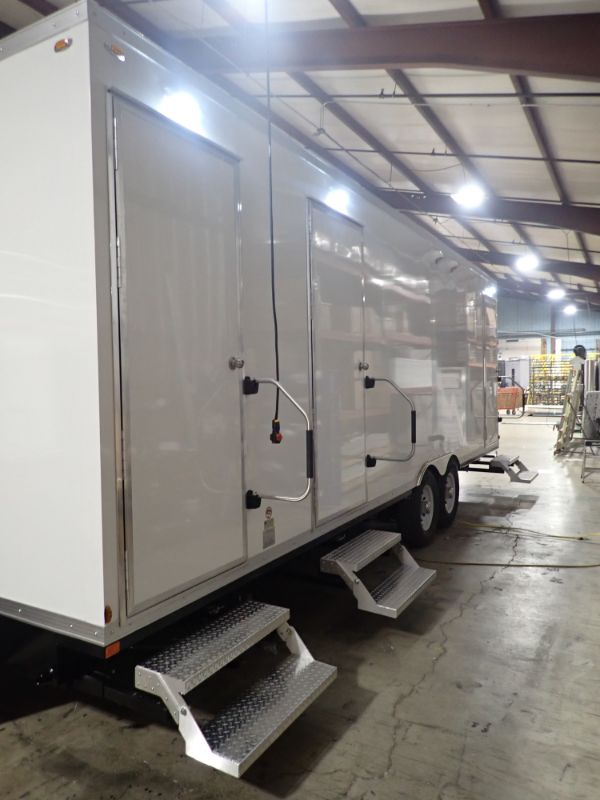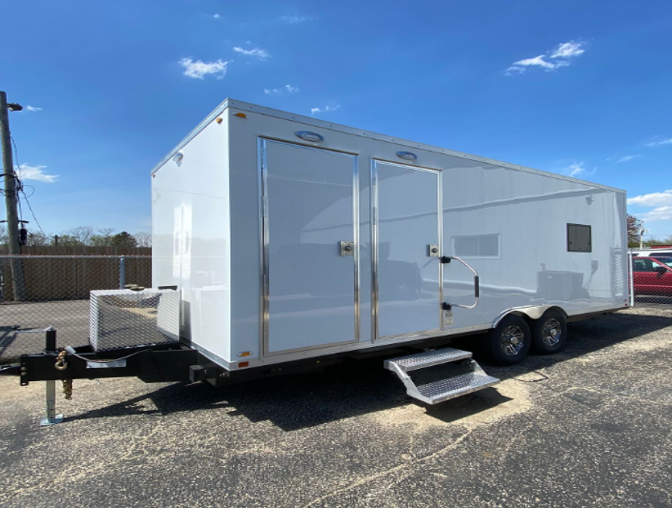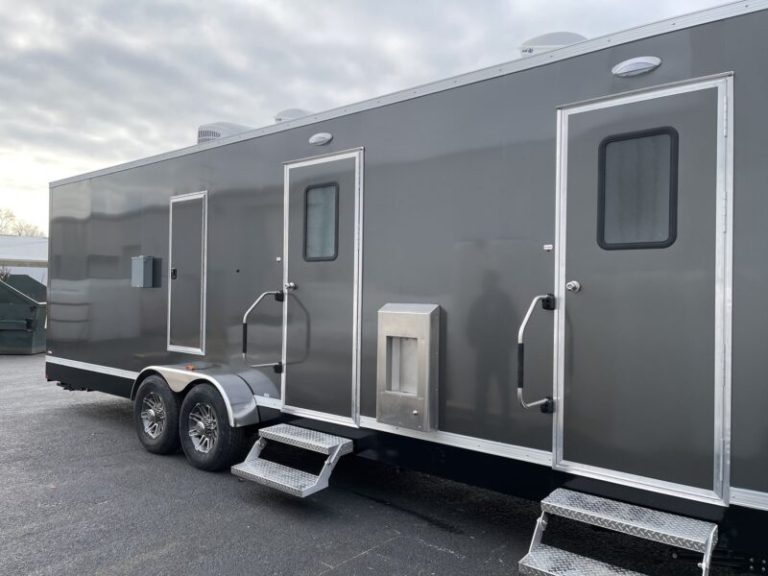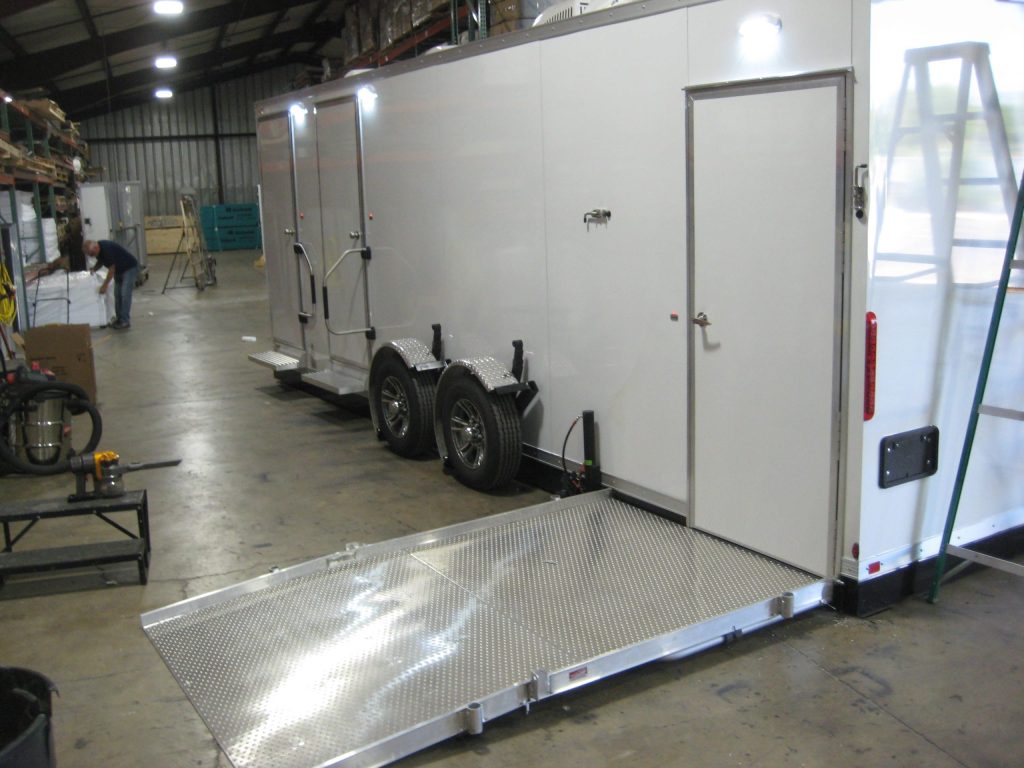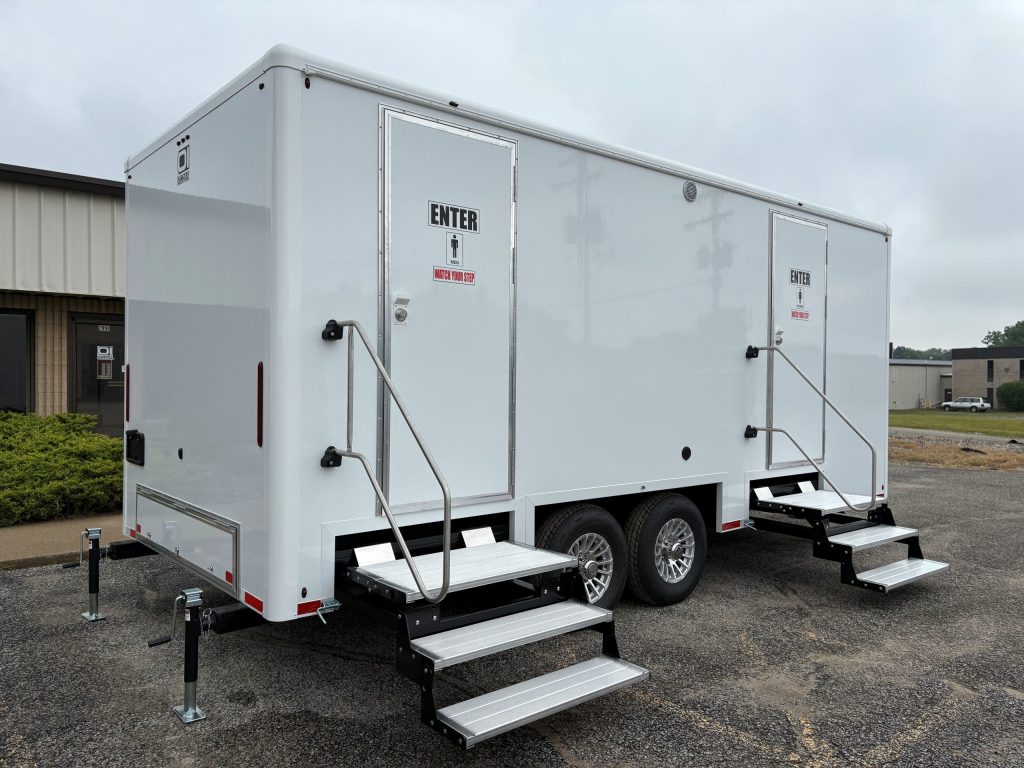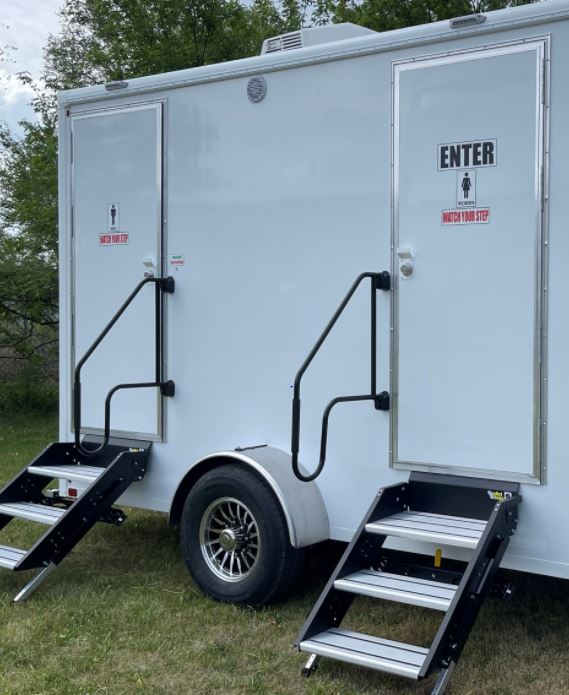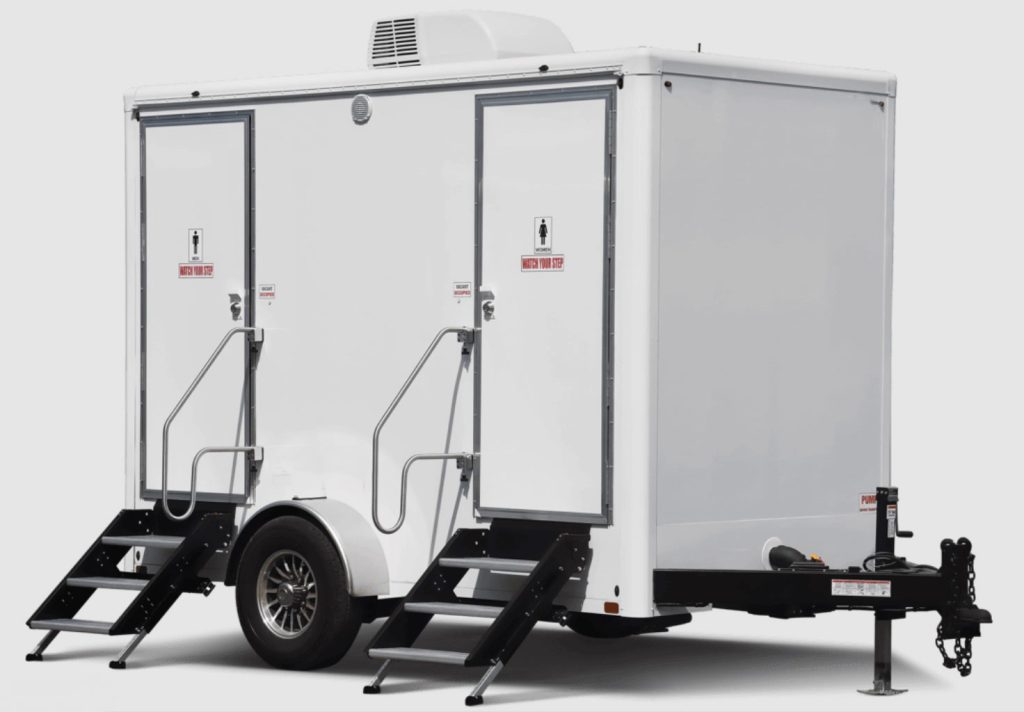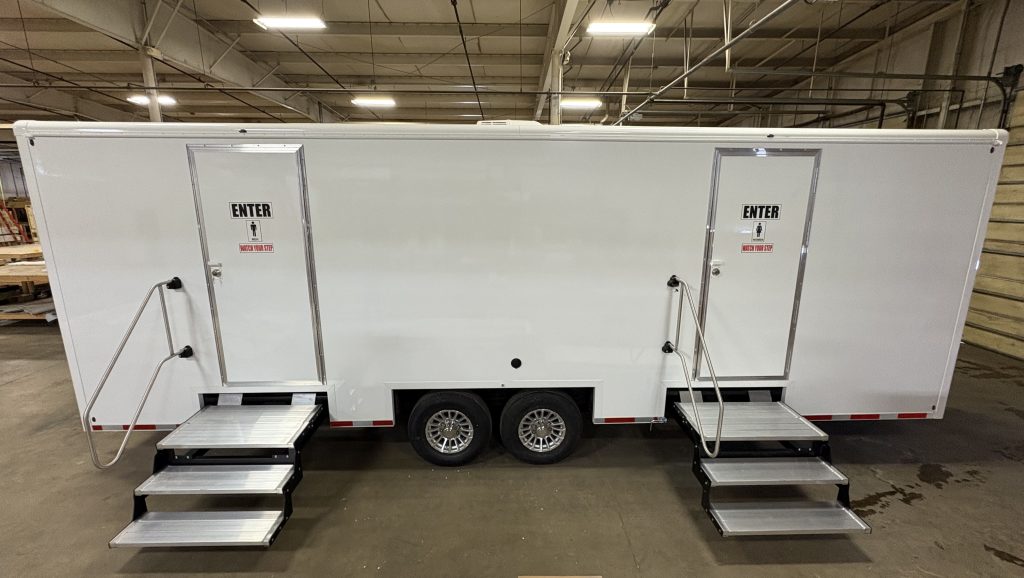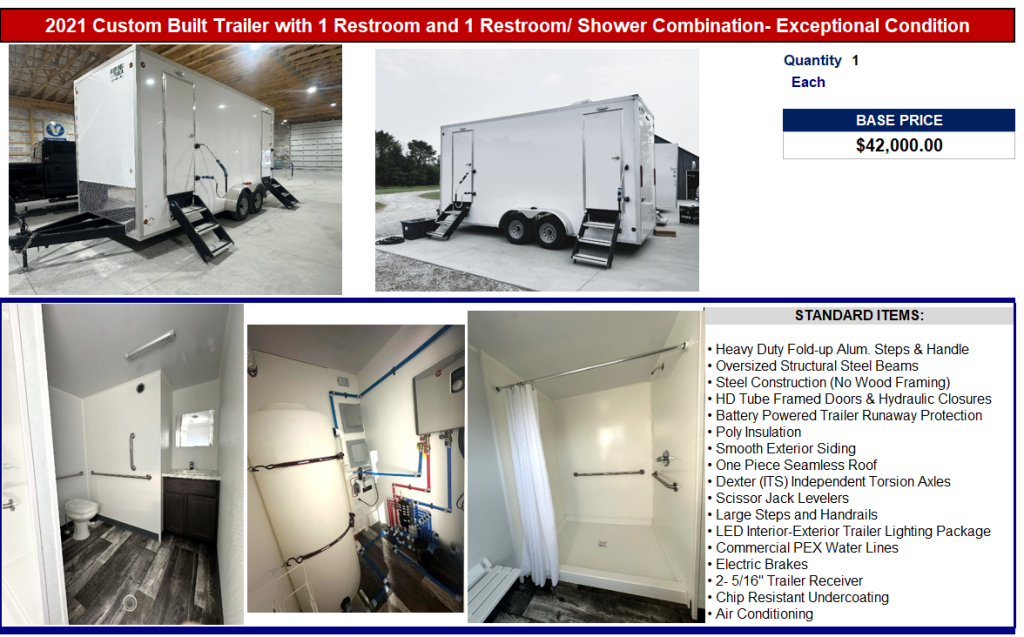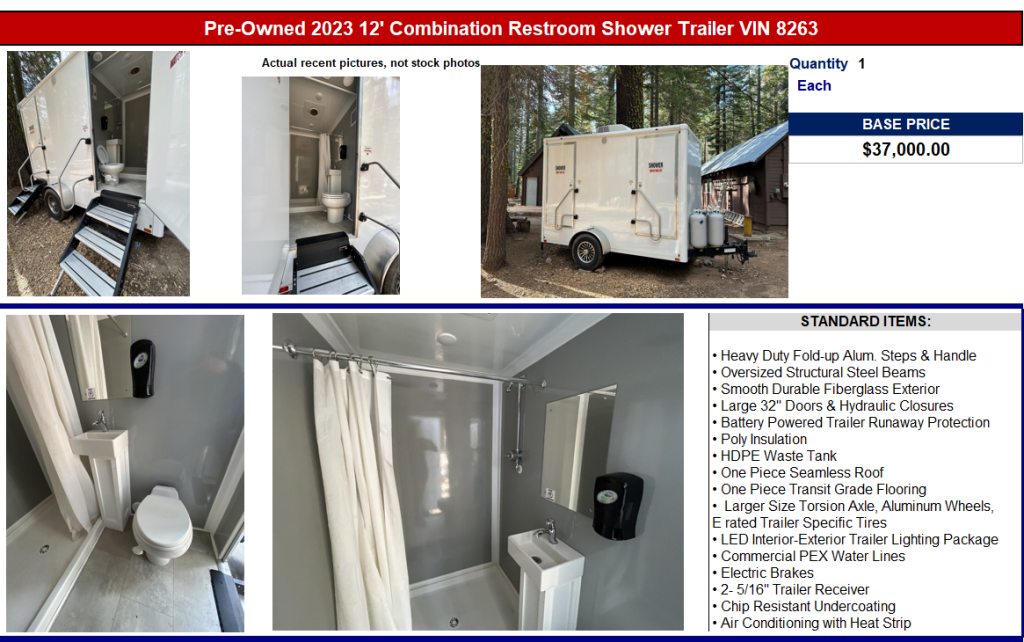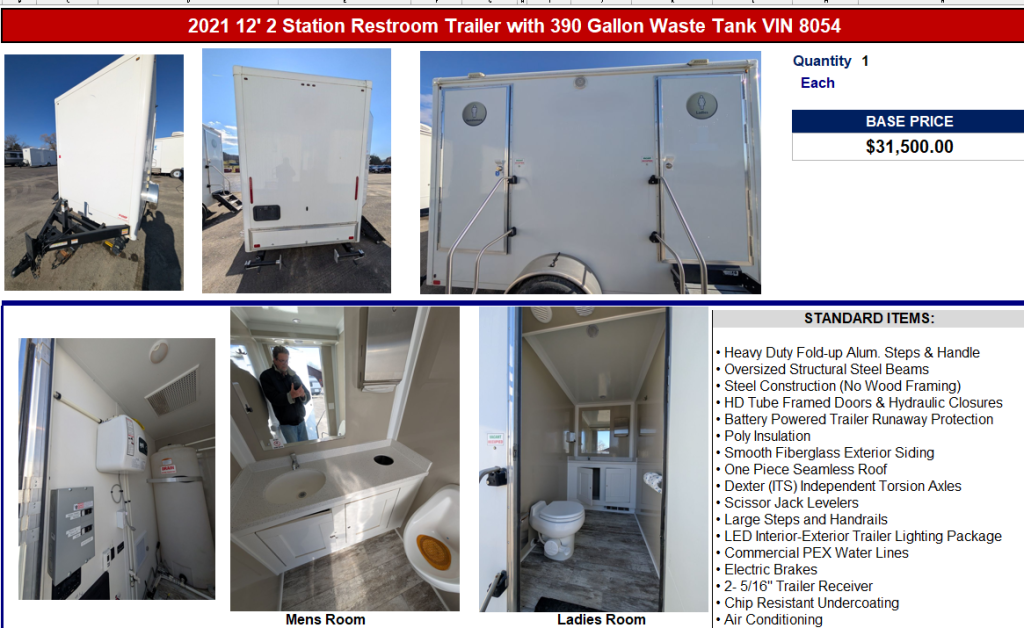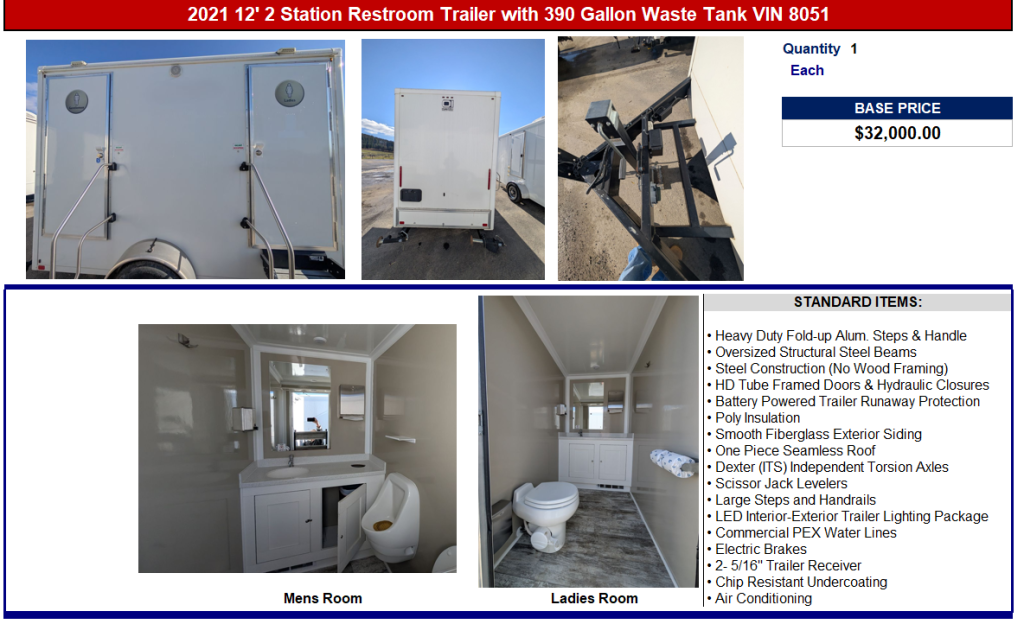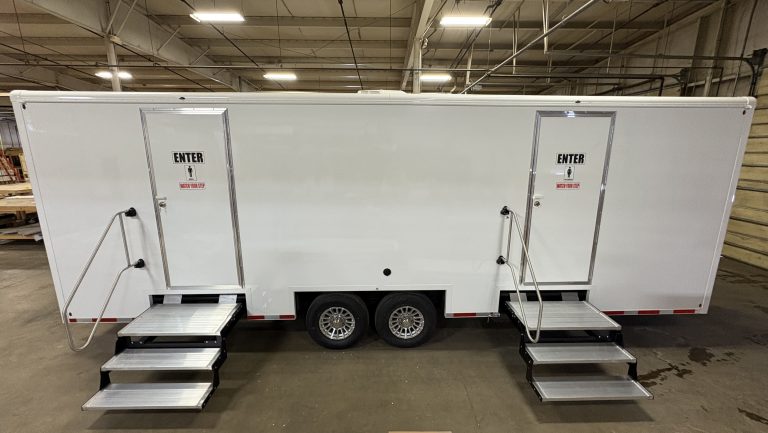
Used Restroom Trailers Aren’t All Created Equal
A used restroom trailer can save you tens of thousands of dollars versus buying new — or it can cost you more in repairs, downtime, and lost rental revenue than you saved on the purchase price. The difference comes down to one thing: knowing what to look for before you buy.
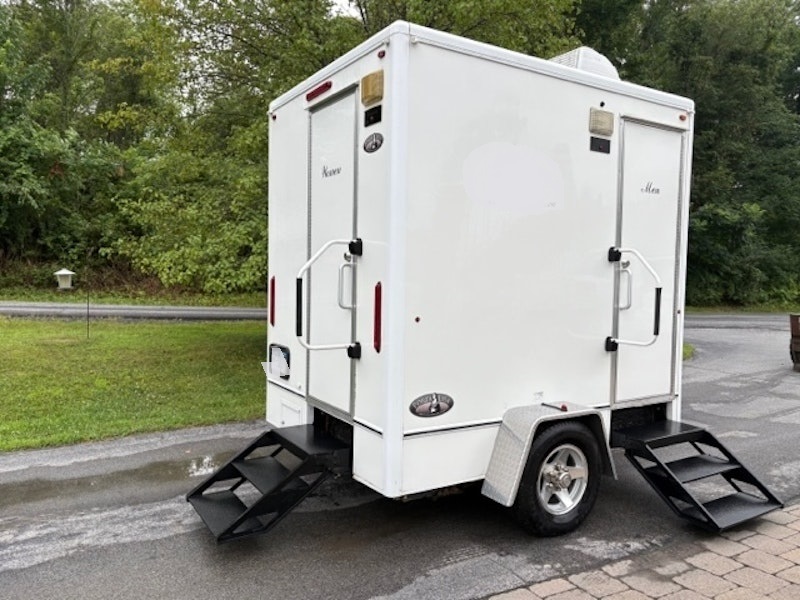
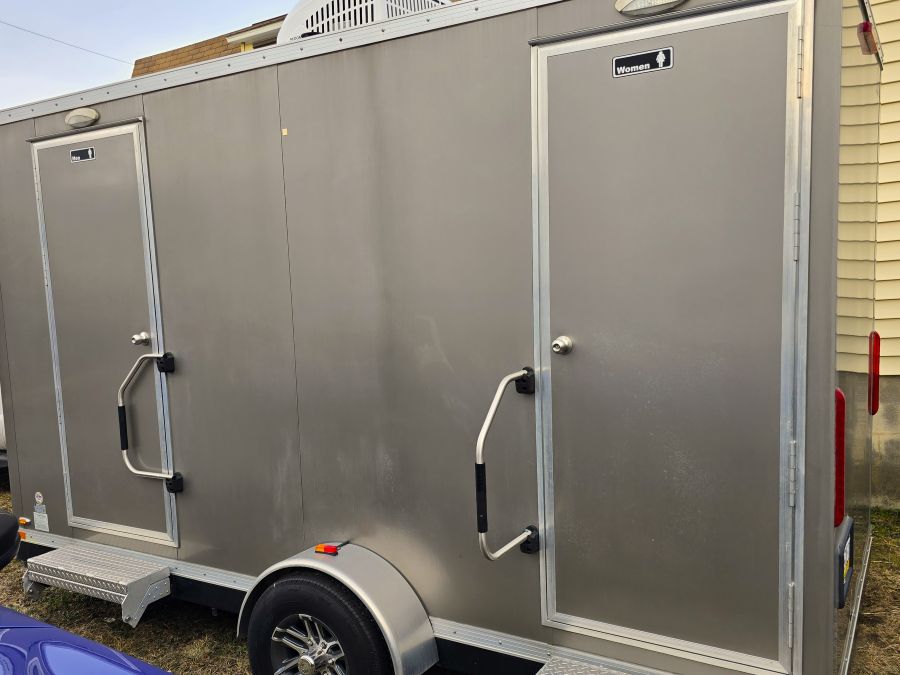
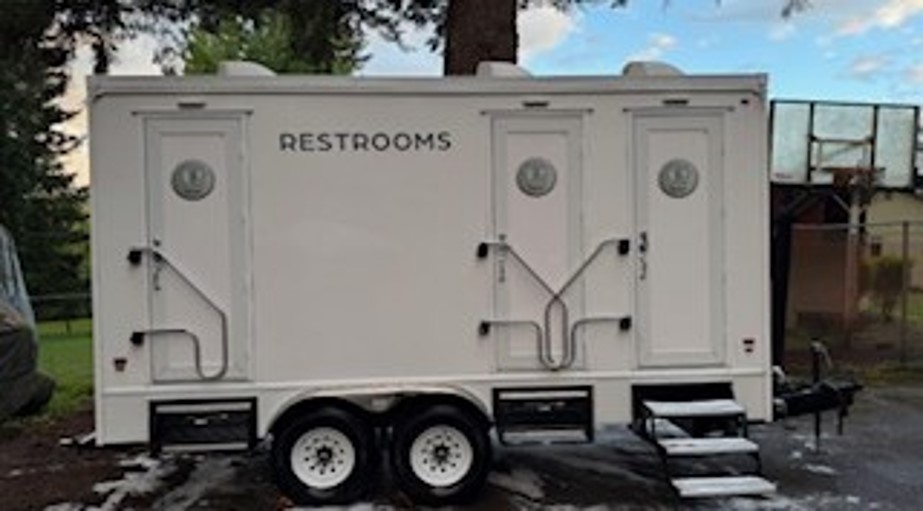
The market for used restroom trailers ranges from professionally inspected and refurbished units sold by reputable dealers, to retired rental fleet trailers with worn-out systems, to private listings where you have no idea what you’re getting. Buying smart means knowing the difference and inspecting the unit thoroughly — or buying from a seller who has already done that work for you.
This guide covers what to inspect on a used restroom trailer, when buying new makes more sense, and how to evaluate condition across the systems that actually matter. Whether you’re building a rental fleet, equipping a construction operation, or buying for an event business, the goal is the same: walk away with a unit that earns its keep instead of one that drains your time and budget.
When Used Makes Sense — and When It Doesn’t
Used restroom trailers are the right call for many buyers, but not all of them. The decision generally comes down to four factors:
Used Usually Wins When:
- You need a unit fast. New builds can have lead times of weeks to months. Pre-owned inventory is ready to deploy now.
- You’re building rental fleet capacity. Adding 2-3 used units to your fleet stretches capital further than a single new build.
- You want to enter the market at a lower price point. Used units are the way most operators get into the business without overcommitting capital.
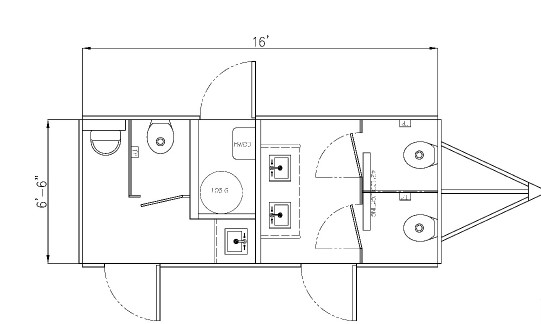
- You don’t need full customization. Standard configurations are widely available used; custom builds usually aren’t.
New Usually Wins When:
- You need specific customization. Branded exteriors, specific layouts, upgraded interiors, or specialty configurations.
- You’re planning long-term deployment. A new trailer with full warranty coverage may be more cost-effective over 10+ years than a used unit needing rebuild work.
- Warranty matters. Pre-owned trailers may carry limited or no manufacturer warranty.
- The trailer is mission-critical. Government contracts, emergency response staging, and specific compliance requirements often justify new.
For our standalone product pages, see pre-owned trailers and new restroom trailers. For the full hub, see restroom trailers for sale.
What to Inspect on a Used Restroom Trailer
If you’re evaluating a used restroom trailer — whether through a dealer, at auction, or from a private seller — these are the systems that determine whether the unit is worth buying. Skip any of these inspections and you’re buying blind.
1. Frame, Chassis & Undercarriage
The frame is the foundation. If it’s compromised, nothing else matters. Look for:
- Rust or corrosion on the steel frame, especially at welds and stress points
- Bent or damaged frame rails — often a sign of overloading or transport damage
- Condition of the axles, springs, and suspension components
- Tire condition, age, and matching size across all positions
- Wheel bearings and brake systems on towable units
- Hitch, coupler, and safety chain condition
- Underbody insulation and tank protection — critical for cold-weather operation
Frame and chassis issues are the most expensive problems to fix on a used trailer. Walk away from anything with serious structural concerns.
2. Plumbing & Water Systems
The plumbing system is where used trailers most often show their age. Inspect:
- Freshwater tank condition — cracks, leaks, contamination
- Waste tank condition — leaks, residue, structural integrity
- Water pump operation and pressure
- Water heater function and tank condition
- Pipe condition under sinks, behind walls, and in mechanical compartments
- Toilet flush mechanisms and seal integrity
- Sink fixtures, faucets, and drain assemblies
- Outlet valves and dump systems for waste discharge
Run the water system through a full cycle if possible — fill tanks, pump water, flush toilets, check for leaks under load. A plumbing system that looks fine static can fail under operating pressure.
3. Electrical Systems
Electrical issues are common in used trailers, and they can range from minor inconveniences to safety hazards. Check:
- Service panel condition and breaker function
- Shore power connection (the outside plug-in)
- Generator function on units equipped with one
- Battery condition and 12V system operation
- Interior outlets — test every one
- Lighting — interior, exterior, and any scene lighting
- GFCI protection in wet areas
- Wiring condition where visible (especially around water and waste systems)
4. HVAC & Climate Control
HVAC systems determine whether the trailer can operate in real-world weather. Verify:
- Air conditioning function under load
- Heating function — gas, electric, or hydronic depending on configuration
- Condition of vents, ductwork, and registers
- Insulation in walls, ceiling, and floor — especially around water lines
- Window seals and any roof penetrations for leaks
An HVAC system that struggles in moderate weather will fail completely in extreme conditions. If you can test the system under load, do it.
5. Interior Condition
Interior wear tells you how the trailer was used and maintained. Inspect:
- Flooring condition — water damage, soft spots, lifting at edges
- Wall finishes — water staining, mold, or repair marks
- Ceiling condition — leaks usually show here first
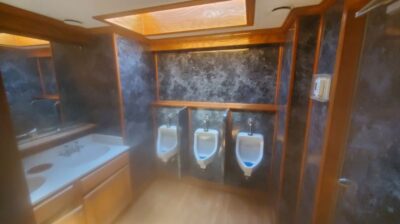
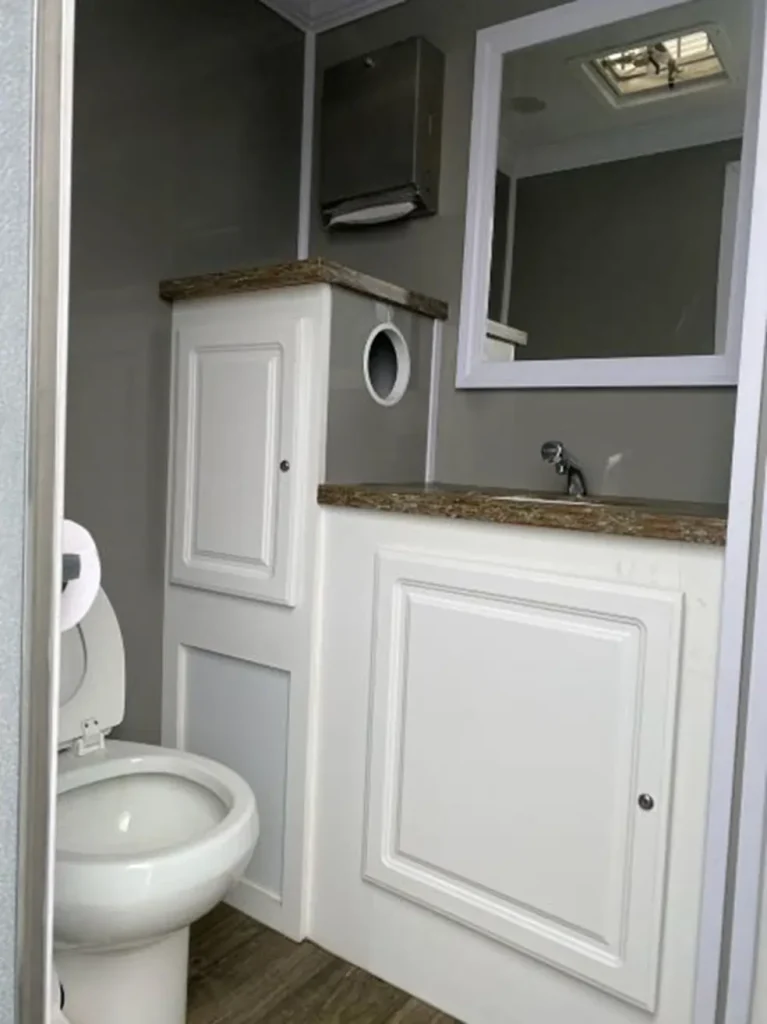
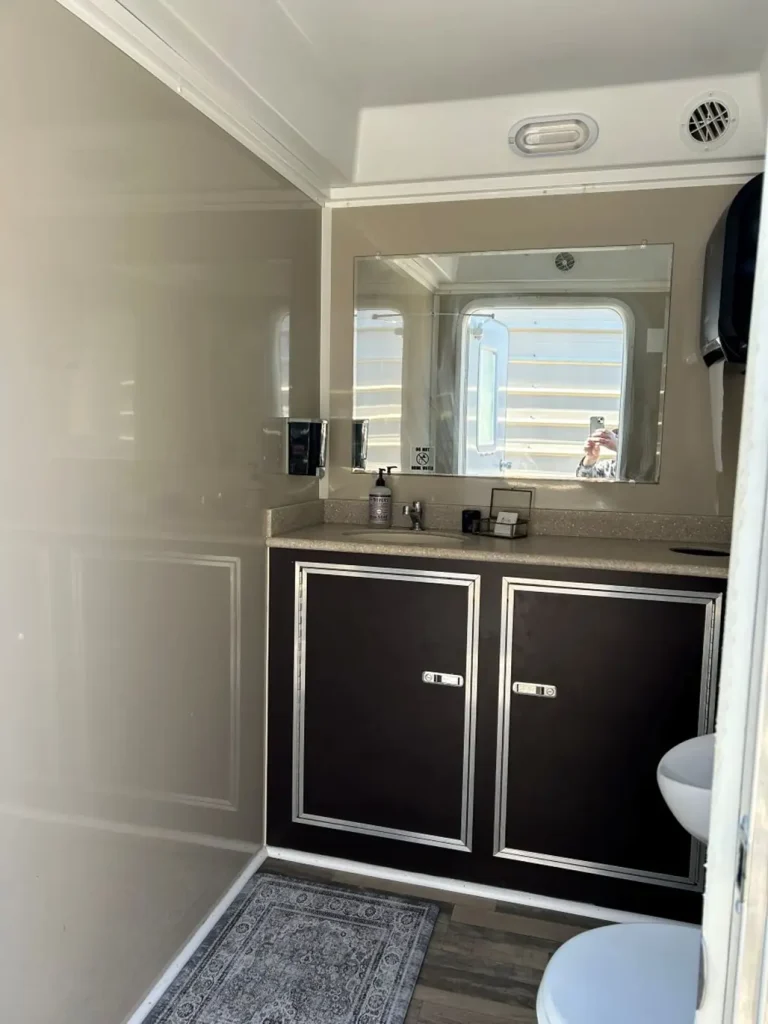
- Counter, sink, and vanity condition
- Mirror, lighting fixture, and accessory condition
- Door operation — interior stall doors, exterior entry doors
- Privacy seal condition on stall doors
- Overall cleanliness and smell (significant odor usually means waste system problems)
6. Exterior Condition
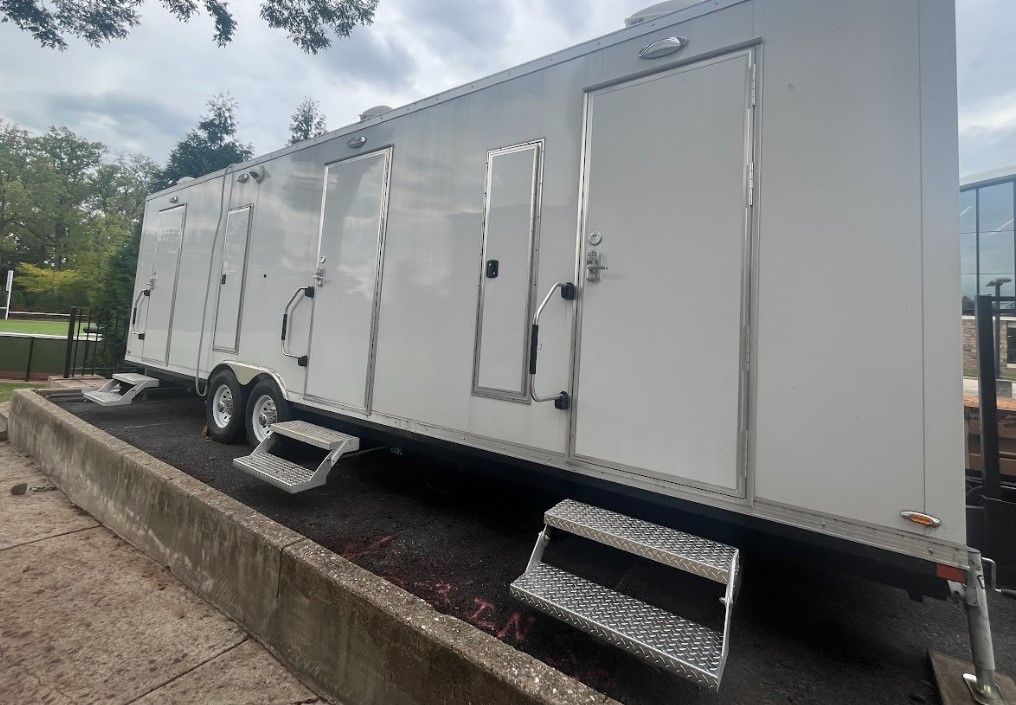
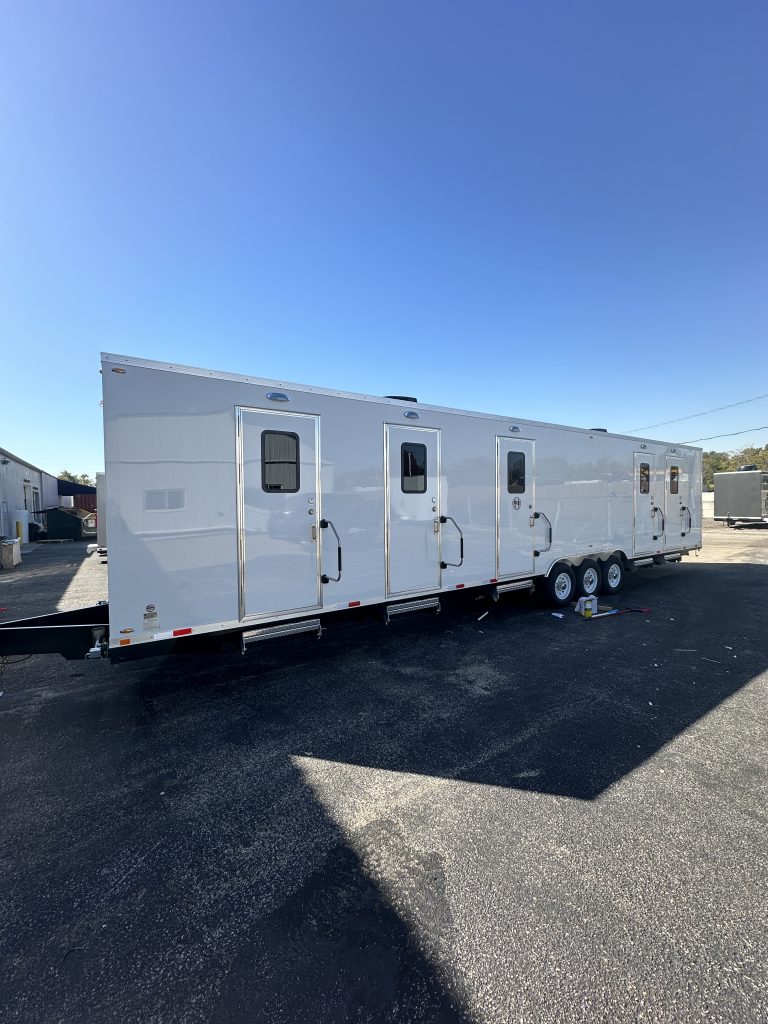
The exterior tells you about transport history, weather exposure, and overall care:
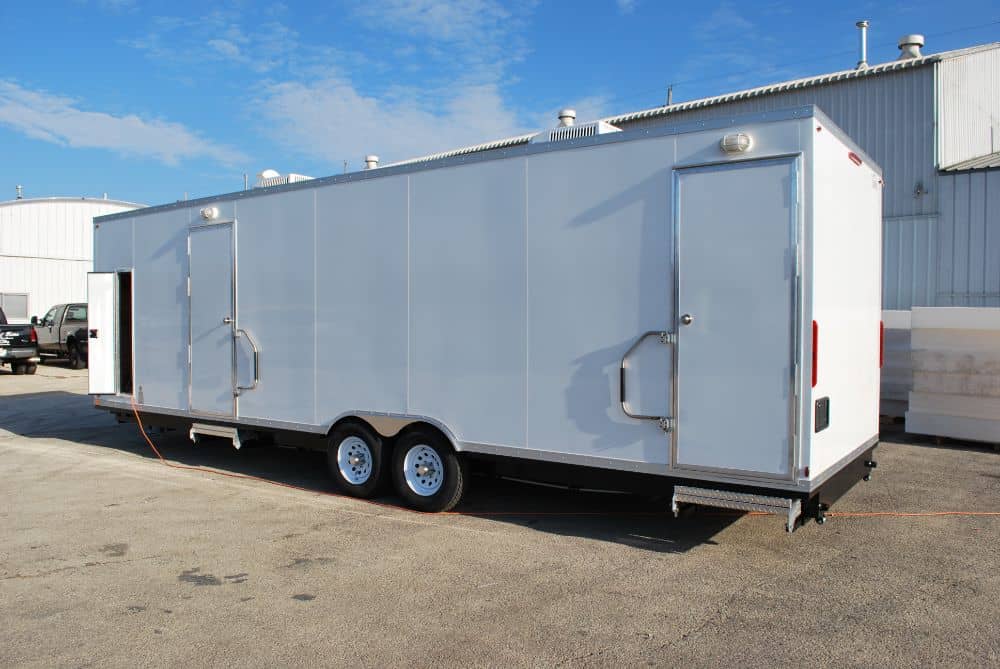
- Body panel condition — dents, repairs, mismatched paint
- Roof condition — sealant, vents, AC unit mounts
- Window and door seal integrity
- Exterior lighting function
- Slide-out condition (on units equipped with them)
- Graphics and branding (relevant if you’ll be re-branding)
7. Documentation & History
Paperwork tells you the rest of the story. Ask for:
- Original manufacturer documentation
- Service and maintenance records
- Any prior repair invoices
- Title and registration documentation
- Warranty status on any transferable coverage
- Rental fleet history if applicable
A trailer with complete documentation is worth more than the same unit with no paperwork. Lack of records doesn’t always mean a bad unit, but it does mean you’re taking on more risk.
Red Flags That Should Stop You From Buying
Some issues are repairable, some are negotiating points, and some are walk-away signals. The following are deal-killers in most cases:
- Significant frame damage or rust — Structural repairs on a trailer frame are expensive and may compromise long-term reliability.
- Active water damage in walls, ceiling, or flooring — Water damage cascades. What you see is usually less than what’s behind the surface.
- Waste tank leaks or cracks — Tank replacement is a major job and frequently exceeds the cost savings of buying used.
- Mold or biological contamination — Remediation is expensive and the trailer may never fully clear odors.
- No title or unclear ownership history — Walk away. Title problems will follow you indefinitely.
- Seller resistance to inspection — A seller who won’t let you fully inspect the unit is telling you something. Listen.
How NRT Inspects Pre-Owned Trailers Before Sale
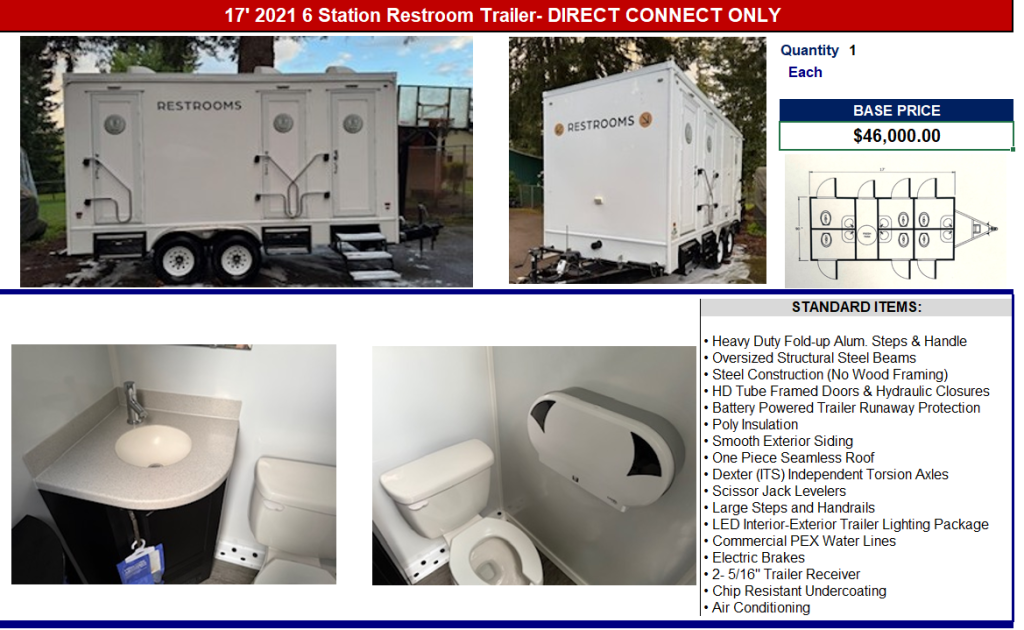
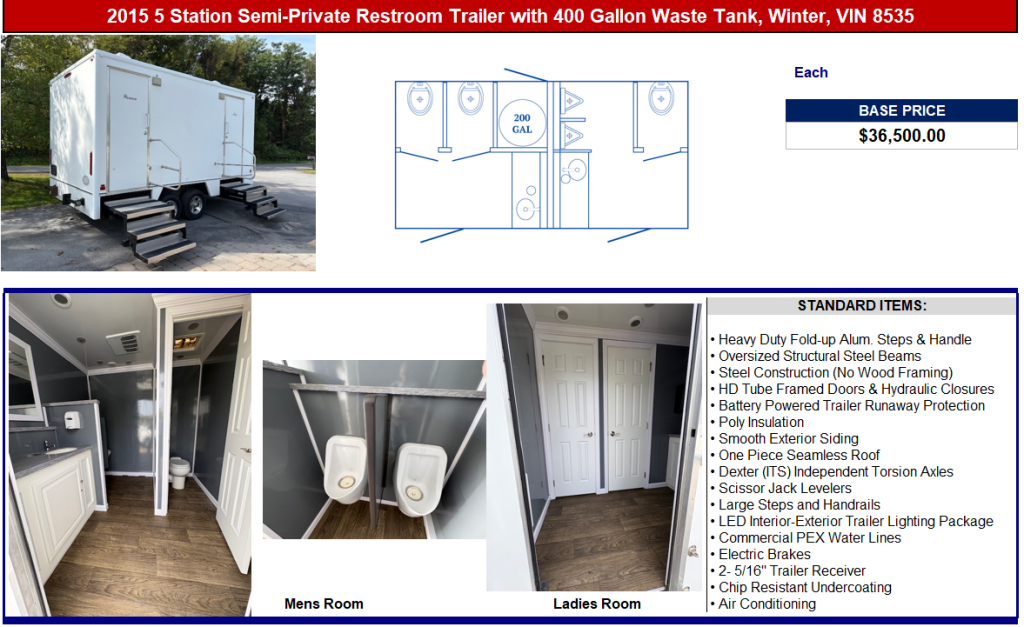
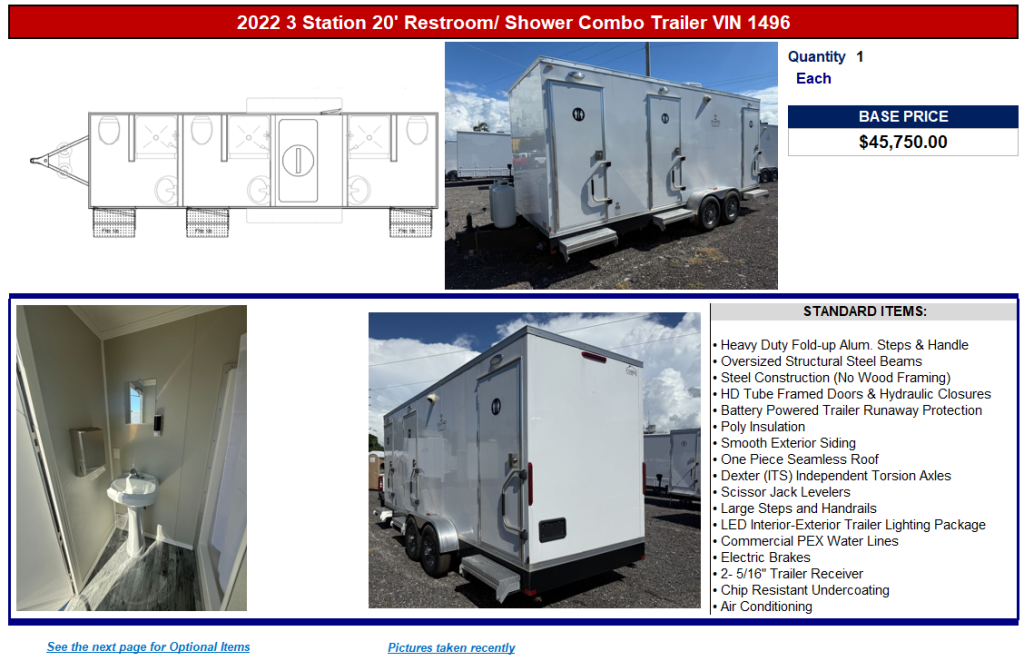
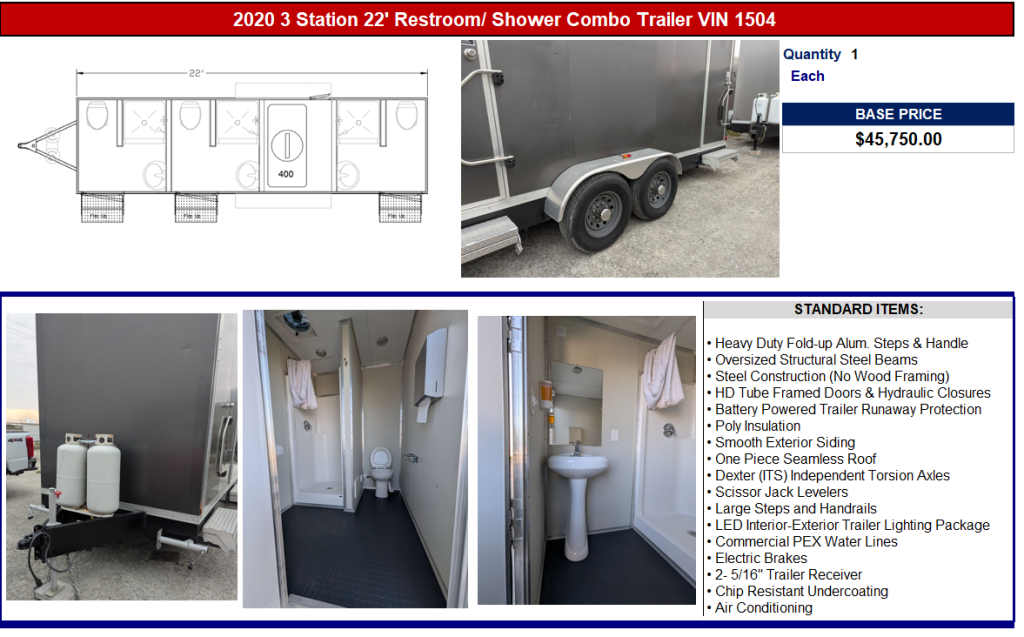
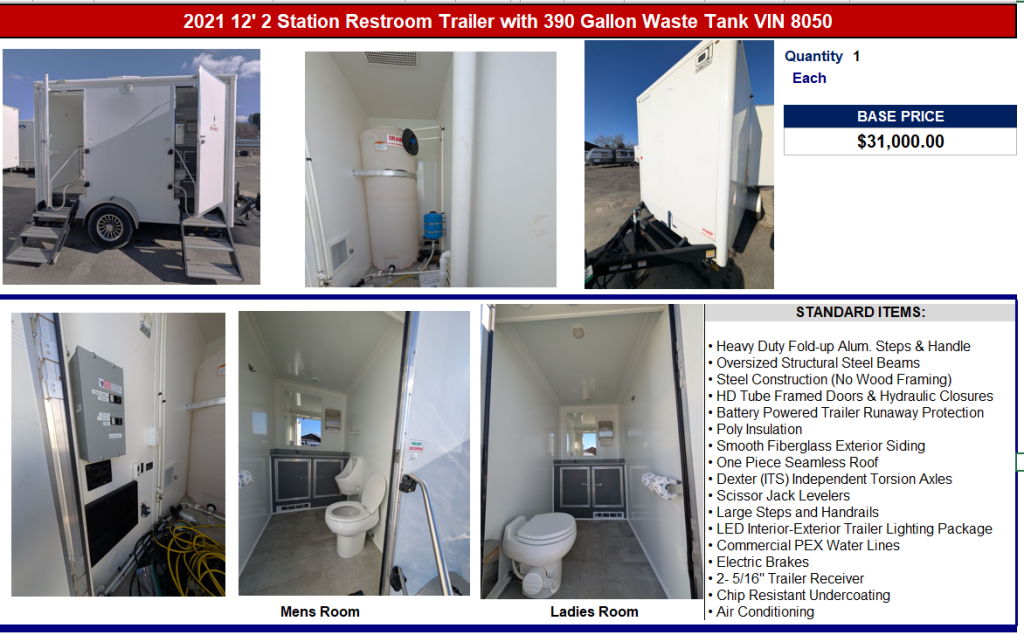
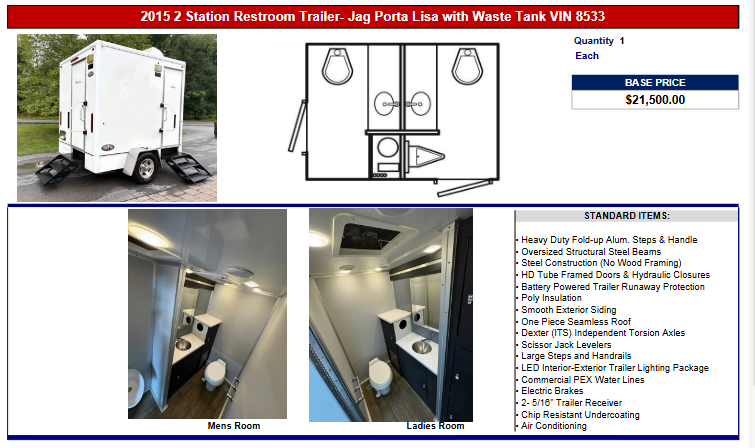
The advantage of buying pre-owned from a reputable dealer is that the inspection work is already done. Every pre-owned restroom trailer NRT sells goes through a structured inspection process covering frame and chassis, plumbing and water systems, electrical, HVAC, interior condition, exterior condition, and full documentation review. Units needing refurbishment work are repaired before sale. Units that don’t meet inspection standards don’t get sold.
That’s the difference between buying from a dealer who stakes their reputation on every unit and buying from a private seller, auction, or unverified source. You’re paying for the inspection work and the assurance that comes with it.
Browse current pre-owned restroom trailer inventory or contact our team to discuss specific configurations and availability.
Buying Used to Build a Rental Fleet
Many of NRT’s pre-owned buyers are rental fleet operators — event rental companies, equipment rental businesses, and specialty trailer operators building inventory. Used units make particular sense for fleet building because:
- Capital stretches further across multiple units
- Inventory can grow incrementally as demand builds
- Standard configurations are easier to manage operationally than one-off custom builds
- Replacement and rotation cycles are easier to plan
For specific rental program details, see our specialty trailer rental program. For buying-versus-renting analysis from the customer’s perspective, our upcoming guide on buying versus renting a restroom trailer covers the operator’s decision framework.
When New Is the Right Move
Used isn’t always the answer. New restroom trailers offer:
- Full manufacturer warranty — covering frame, plumbing, electrical, and HVAC systems
- Latest features and specifications — current finishes, fixtures, and system upgrades
- Full customization capability — branded exteriors, custom layouts, upgraded interiors
- Predictable performance — no inherited wear or hidden history
- Longer total service life — for buyers planning long-term deployment
The trade-off is upfront cost and lead time. For buyers who can absorb both, new is often the better long-term investment. Browse new restroom trailers or use our Build Your Own Trailer tool to spec a custom configuration.
Frequently Asked Questions About Used Restroom Trailers
How much can I save buying a used restroom trailer versus new?
Savings vary based on configuration, age, and condition. Pre-owned units typically come in well below comparable new builds, though the exact percentage depends on the specific trailer. The biggest factor is whether the unit has been professionally inspected and refurbished, which affects both price and risk. For current pricing, contact our team directly with your configuration requirements.
What’s the biggest risk when buying a used restroom trailer?
Hidden water damage and waste system problems are the two biggest risks. Both can be expensive to repair and may not be visible during a basic walkthrough inspection. Buying from a reputable dealer that inspects and refurbishes units before sale significantly reduces these risks compared to buying from a private seller or unverified source.
Do pre-owned restroom trailers come with a warranty?
Warranty coverage on pre-owned units varies. Some manufacturer warranties are transferable to subsequent owners; others are not. Reputable dealers may offer their own limited warranty or service guarantee on pre-owned units they’ve inspected and refurbished. Always confirm warranty terms in writing before purchase.
How old is too old for a used restroom trailer?
Age alone isn’t the deciding factor. A well-maintained 8-year-old trailer can be a better buy than a poorly maintained 3-year-old unit. What matters is overall condition, maintenance history, system function, and whether the unit has been professionally inspected. Many NRT pre-owned trailers are well past their initial production date and still provide years of reliable service after refurbishment.
Can I customize a pre-owned restroom trailer?
Limited customization is possible on pre-owned units — re-branding, exterior wrap, interior refresh, and some fixture upgrades. Major structural or layout changes are usually impractical on used trailers. For full customization, new builds are typically the better option. See our custom-made trailers page for full customization options.
Should I have a used trailer inspected before buying from a private seller?
Yes, always. If you’re not equipped to inspect the trailer yourself across frame, plumbing, electrical, HVAC, and interior systems, hire a qualified inspector. Private-seller transactions carry the highest risk because there’s no dealer warranty or refurbishment process backing the sale. The inspection cost is small compared to the risk of buying a trailer with hidden problems.
How long should a restroom trailer last?
A well-built restroom trailer that’s properly maintained can last 15-20+ years. The biggest factors in trailer longevity are build quality, maintenance discipline, and use patterns. NRT trailers are engineered for sustained operation with heavy-duty construction designed for long-term service. For maintenance guidance, see our restroom and shower trailer maintenance guide.
Does NRT deliver pre-owned trailers nationwide?
Yes. NRT delivers pre-owned restroom trailers nationwide from facilities in Murfreesboro, Tennessee and West Seneca, New York. Every delivery includes coordinated transport, on-site placement, leveling, and connection support — the same delivery standard as new units.
Find the Right Restroom Trailer — New or Pre-Owned
Whether you’re shopping pre-owned inventory, scoping a new build, or evaluating which direction makes more sense for your operation, our team is here to help. Browse current pre-owned inventory, view new restroom trailers, or request a quote for configuration recommendations matched to your operation.