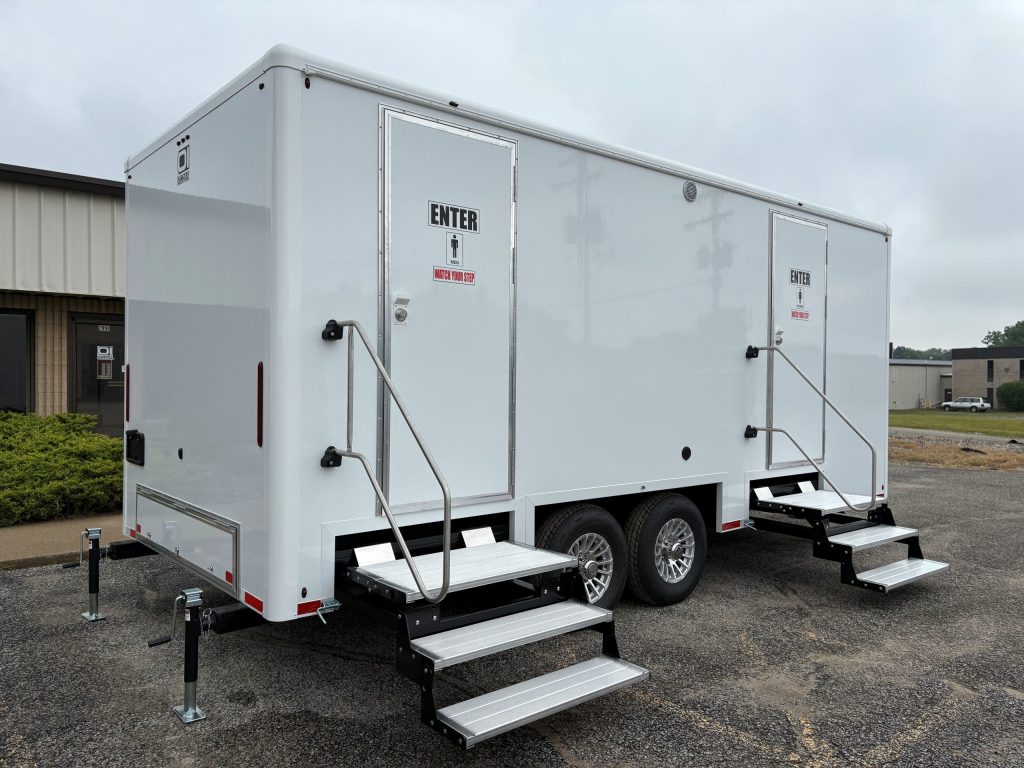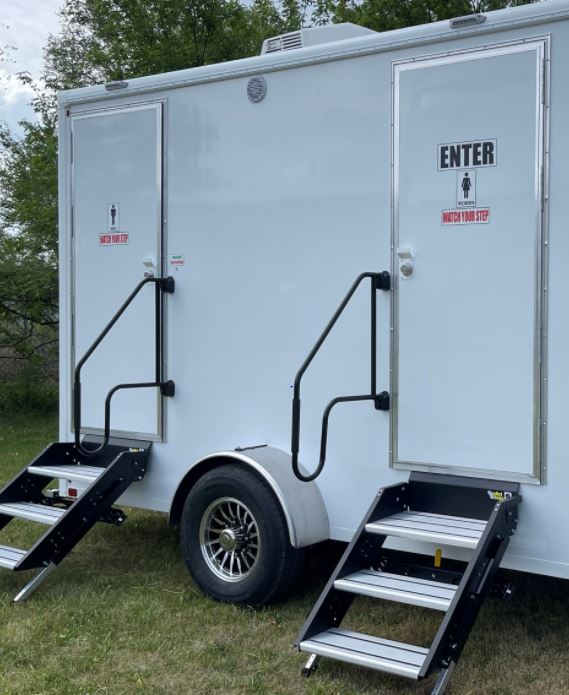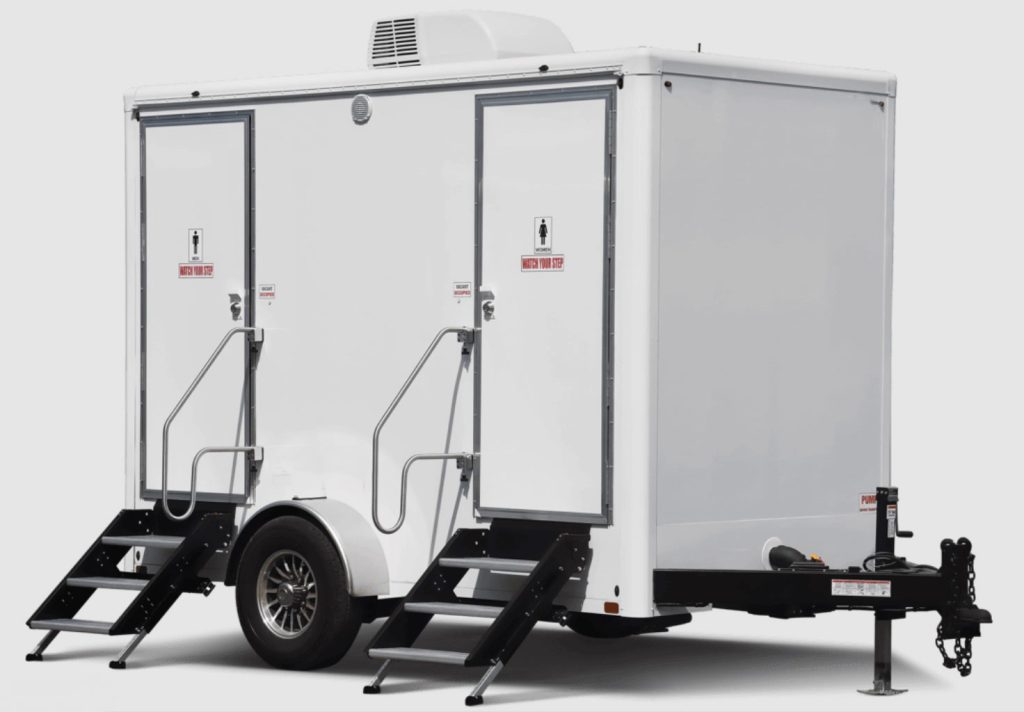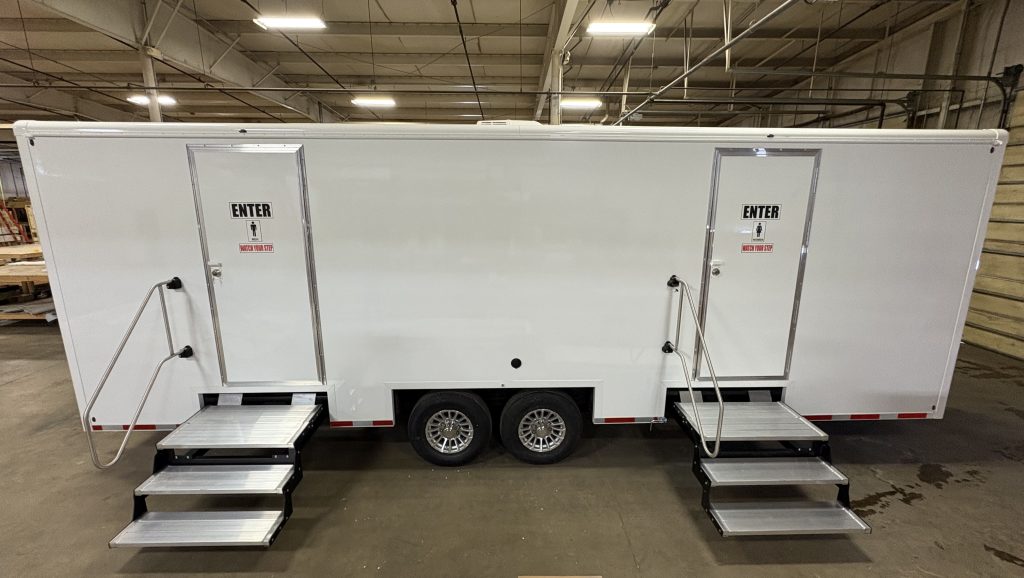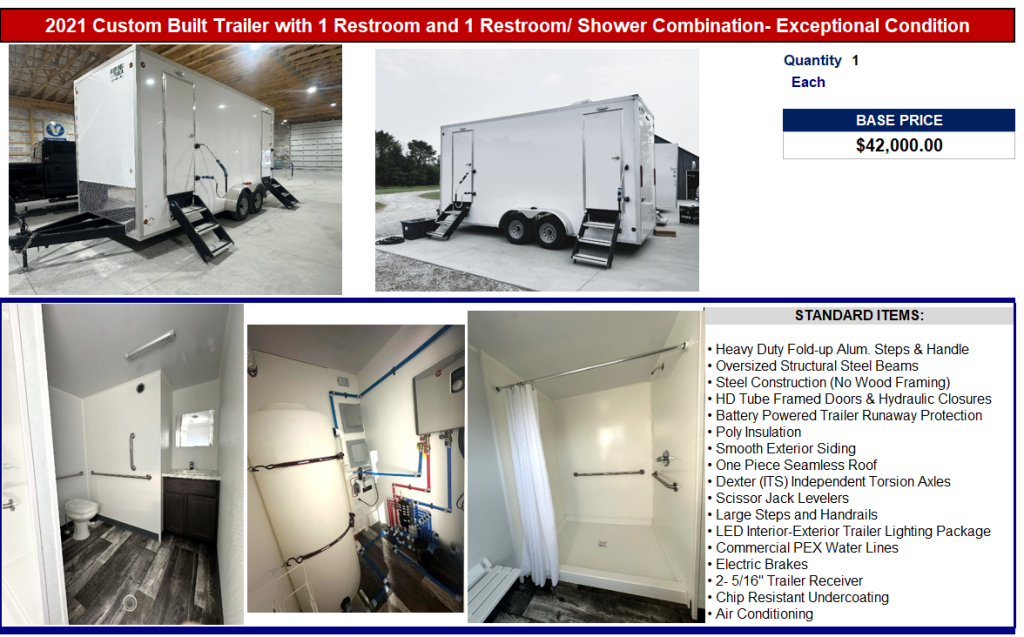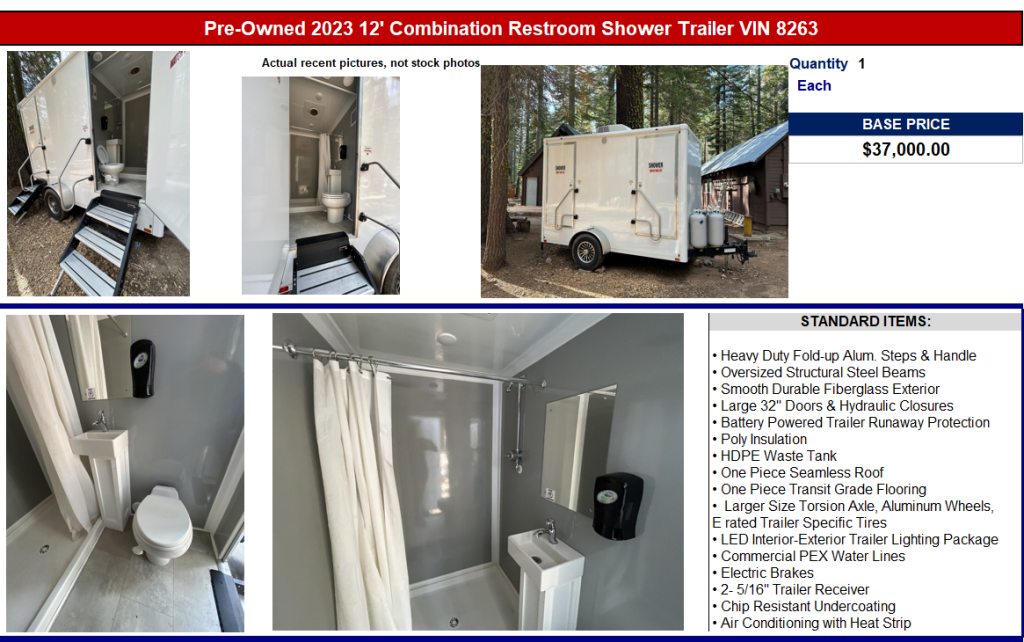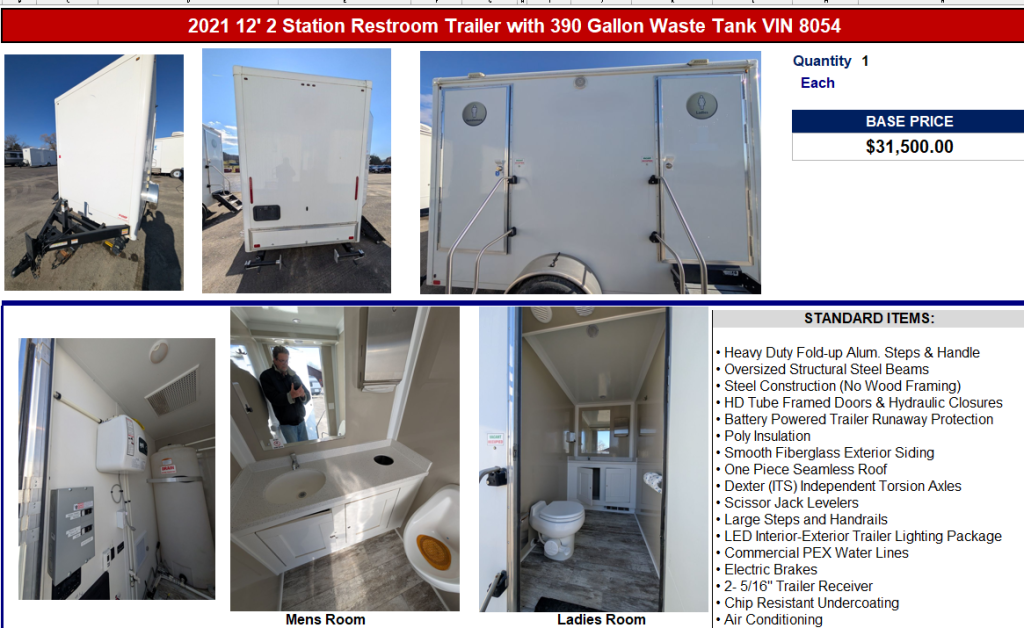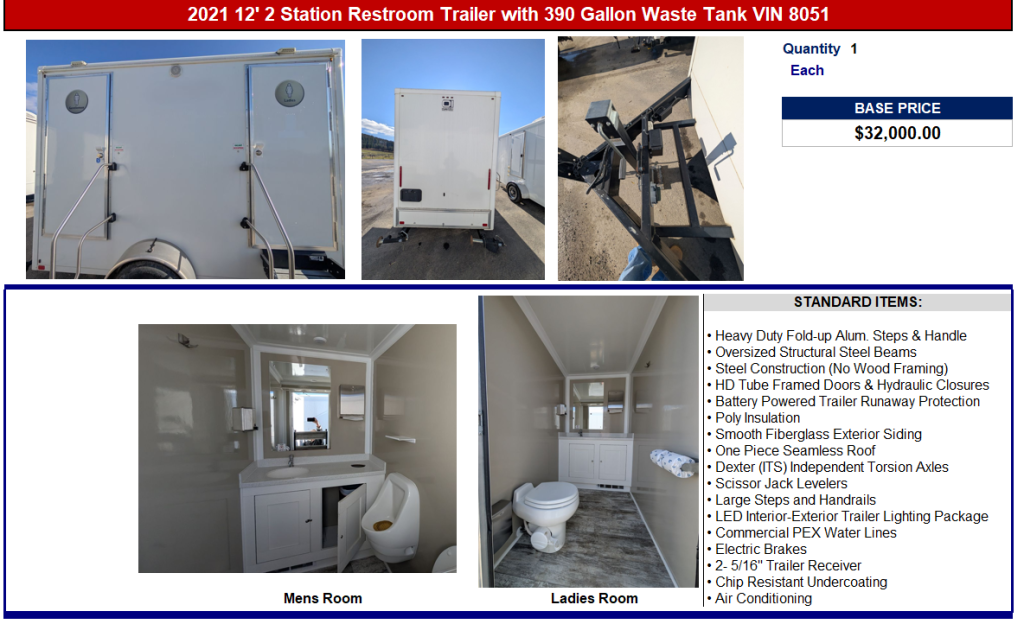
The Decision That Saves or Costs You Thousands
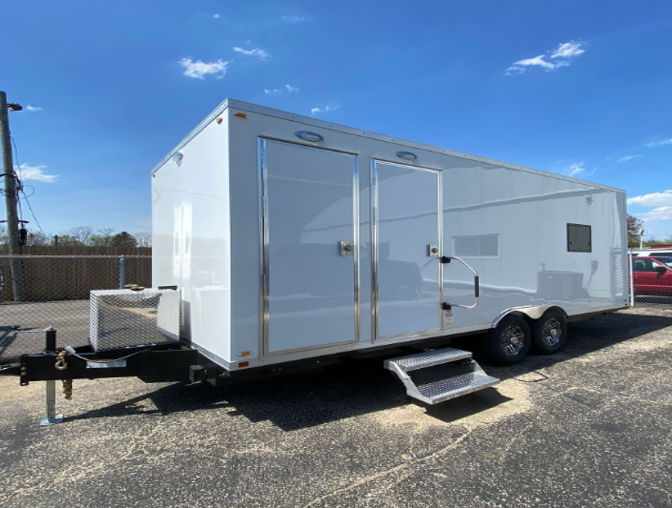
Whether to buy or rent a restroom trailer is one of the bigger operational decisions a contractor, event company, property manager, or facility operator will make. Get it right and the unit pays for itself in 18 to 36 months — or it costs you nothing and shows up exactly when you need it. Get it wrong and you’re either tying up capital in equipment you barely use, or burning thousands in rental fees on units you should have owned years ago.
The right answer isn’t the same for everyone. It comes down to how often you’ll use the trailer, what you’ll use it for, how much capital you can commit, and what your operation looks like five years from now. This guide walks through the actual decision framework so you can make the call with confidence — not based on a sales pitch.
The Quick-Answer Decision Framework
Before getting into the details, here’s the short version. Most operators land on one of these three answers based on how often they use a restroom trailer:
- Use it less than 8 times per year? Rent. Ownership rarely pays off at that frequency.
- Use it 8 to 20 times per year? Run the numbers. Either direction can be right depending on rental costs, storage, and operational needs.
- Use it more than 20 times per year, or for extended single deployments? Buy. Ownership almost always wins at this level of use.
These thresholds shift based on your specific situation, but they’re the starting point. Now let’s break down what actually drives the decision.
When Renting Makes More Sense
Renting is often the right call for operators in any of these situations:
Infrequent or One-Off Use
A single annual event, a one-time construction project, a one-off facility need — these don’t justify ownership. The cost of buying a trailer, storing it, maintaining it, and transporting it usually exceeds the cost of renting one when you need it.
Variable or Unpredictable Demand
Some operators have demand that swings wildly year to year. A wedding venue with seasonal volume, a contractor whose project mix changes by year, a property manager with situational facility needs. Renting lets you scale capacity to actual demand instead of paying for unused capacity in slow periods.
Limited Capital or Capital Allocation Priorities
Even when ownership would pay off long-term, you may have better uses for capital. Equipment, vehicles, facility expansion, or hiring may all generate better returns than tying up money in a restroom trailer that gets used occasionally. Rental keeps the trailer expense as an operating cost instead of a capital commitment.
No Place to Store It
Restroom trailers need storage between deployments — protected from weather, secured against theft, and accessible enough to deploy quickly. Operators without dedicated storage space face hidden costs that often tip the math toward renting.
You’re Testing the Market
Event rental companies, mobile facility businesses, and contractors entering the trailer space sometimes rent first to test whether the operational fit is right before committing to ownership. Renting a few times tells you whether the demand and margins actually support ownership.
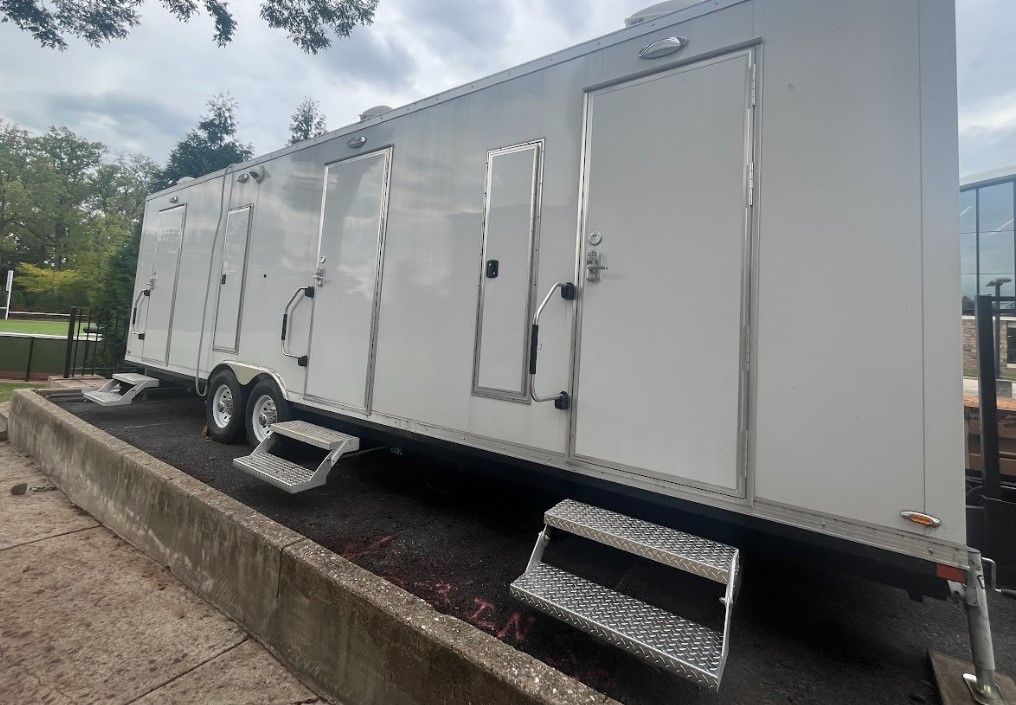
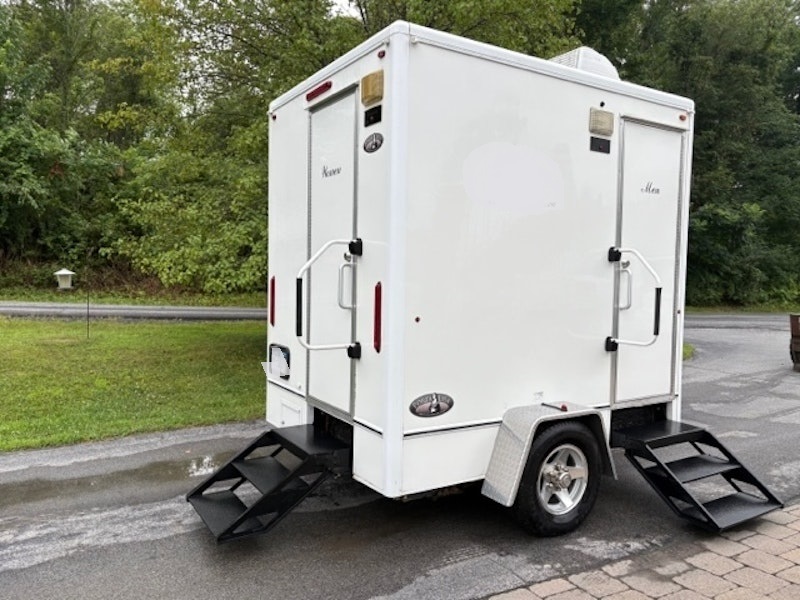
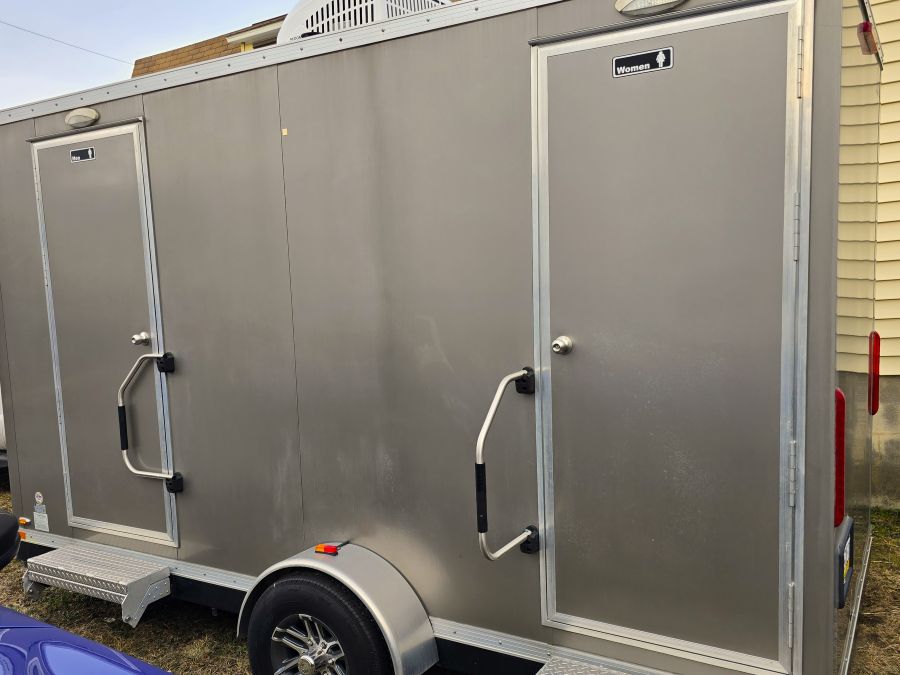
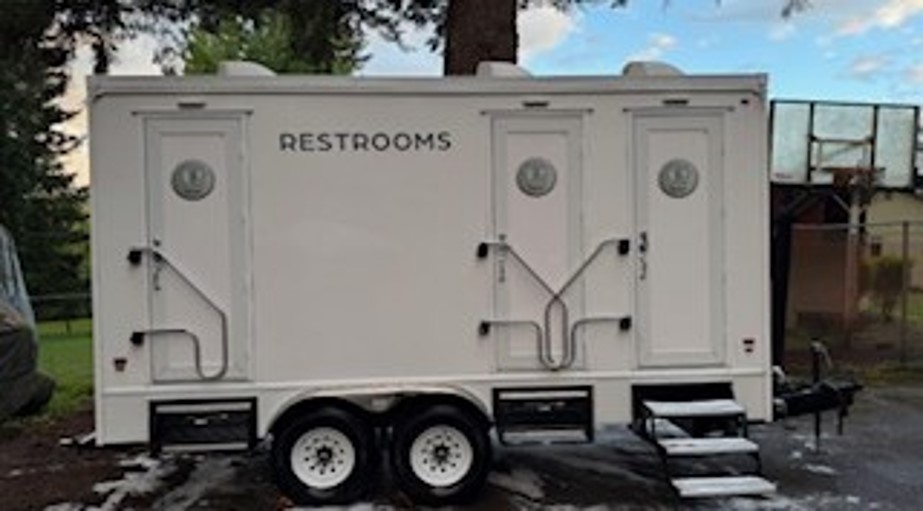
NRT’s restroom trailer rental program covers all of these use cases. We rent to government, corporate and business, university and campus, and non-profit operations across the country.
When Buying Makes More Sense
Ownership is the right call when use frequency is high enough that the math tips clearly in favor of capital investment over recurring rental fees. The most common buy-side scenarios:
Frequent, Predictable Use
Event rental companies, contractors with consistent project flow, and operators with steady year-round demand typically save money buying. Once you’re using a trailer 20+ times a year, the cumulative rental cost exceeds the cost of ownership in 2-3 years. After that, every additional use is essentially free.
Extended Single Deployments
A construction project running 12 months or longer, a government deployment with extended duration, a facility need that will continue for years — these justify ownership even if it’s only one deployment. The total rental cost over a long single deployment usually exceeds the purchase price.
You’re Building a Rental Fleet
If you’re in the business of renting trailers to others, ownership is the entire business model. The economics only work when you own the asset and charge for use.
You Need Customization
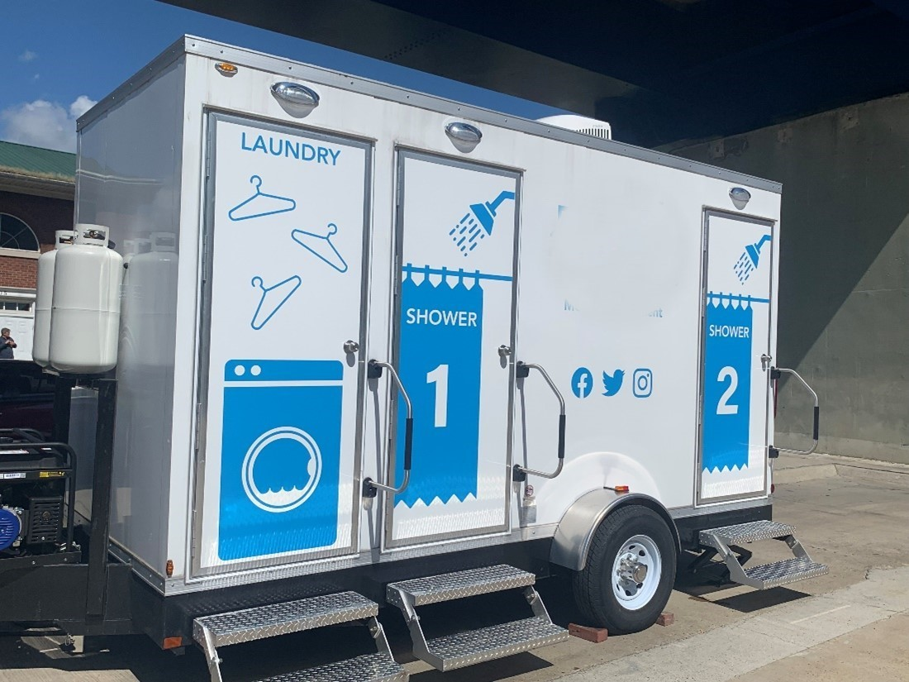
Branded exteriors, specific configurations, integrated capabilities, or specialty builds aren’t available in the rental market. If your operation needs something specific, ownership is the path. See our custom-made trailers page for build options.
You Need Guaranteed Availability
Rental availability fluctuates with market demand. During peak seasons — wedding season, hurricane season, major event seasons — rental inventory tightens and prices rise. Operators with mission-critical needs often buy specifically to guarantee a unit is available when they need it.
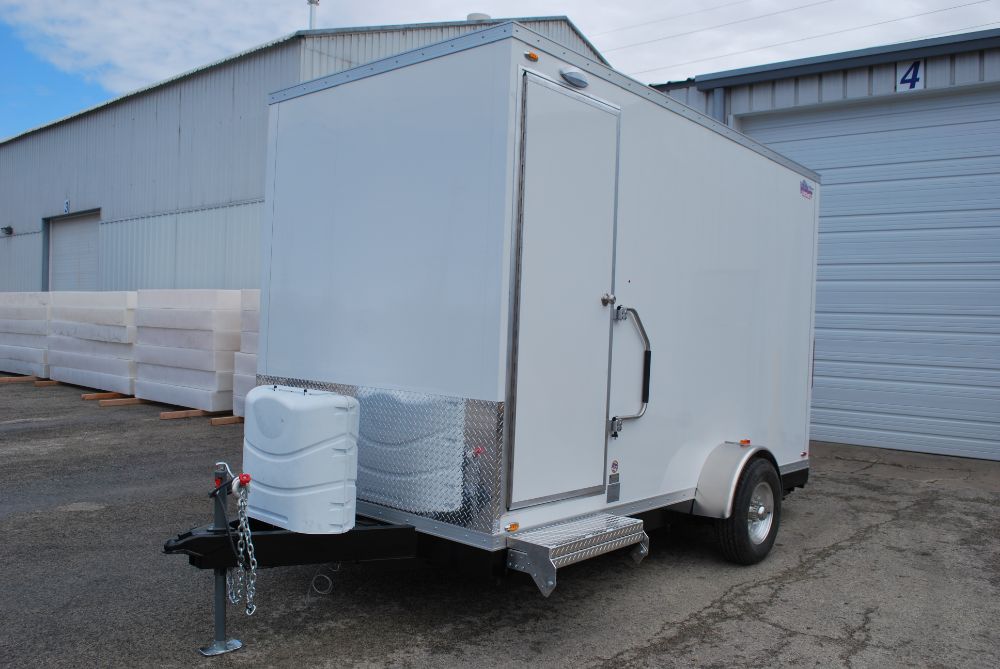
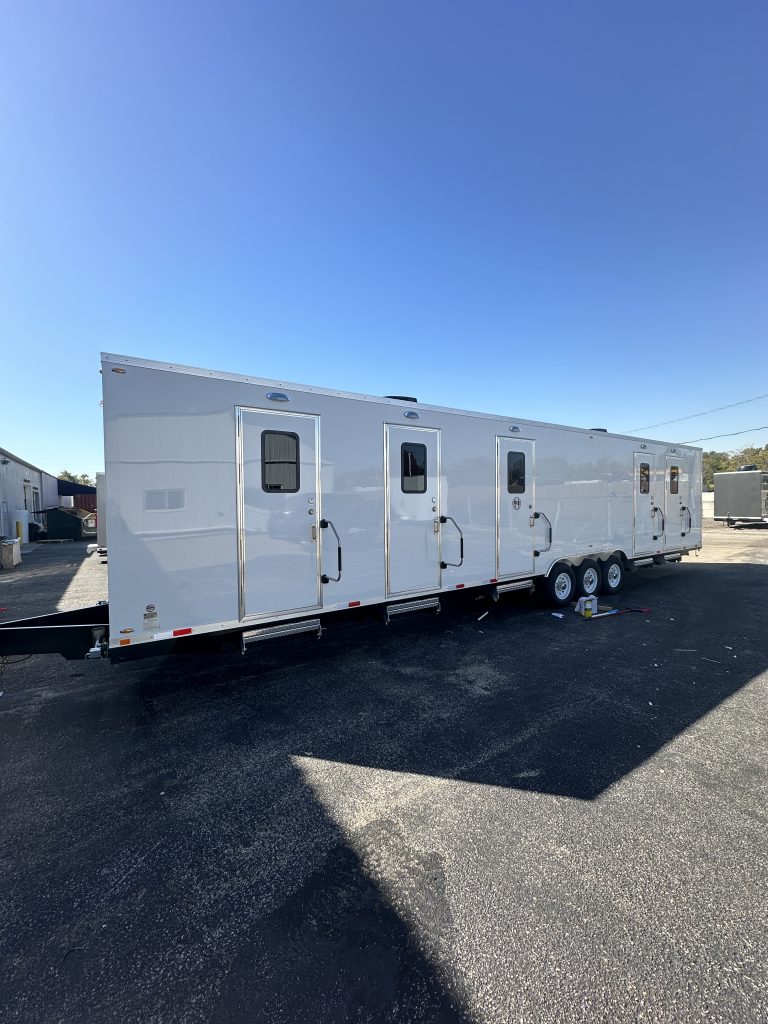
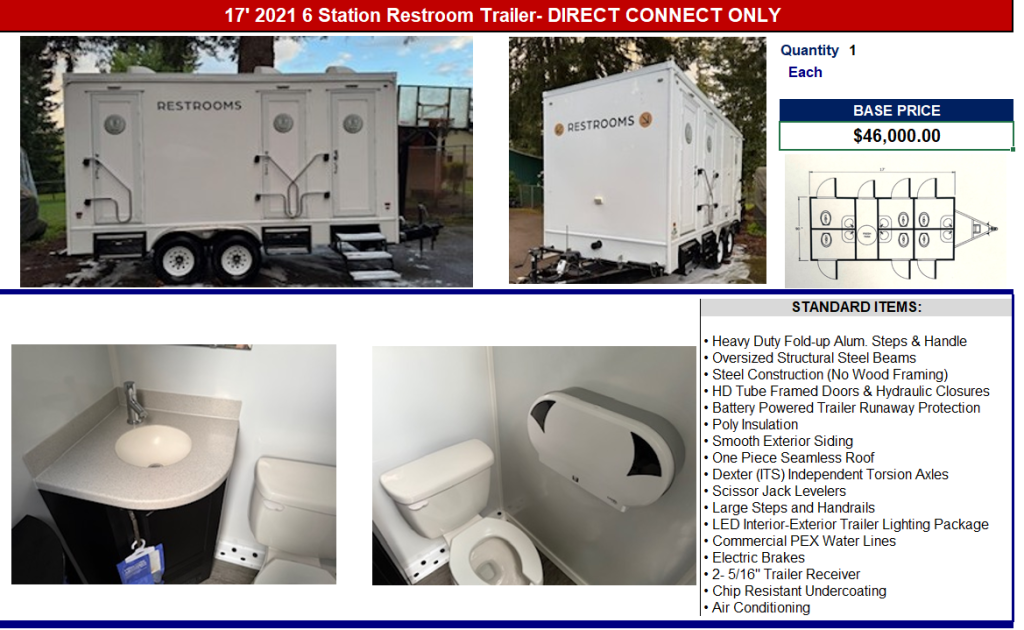
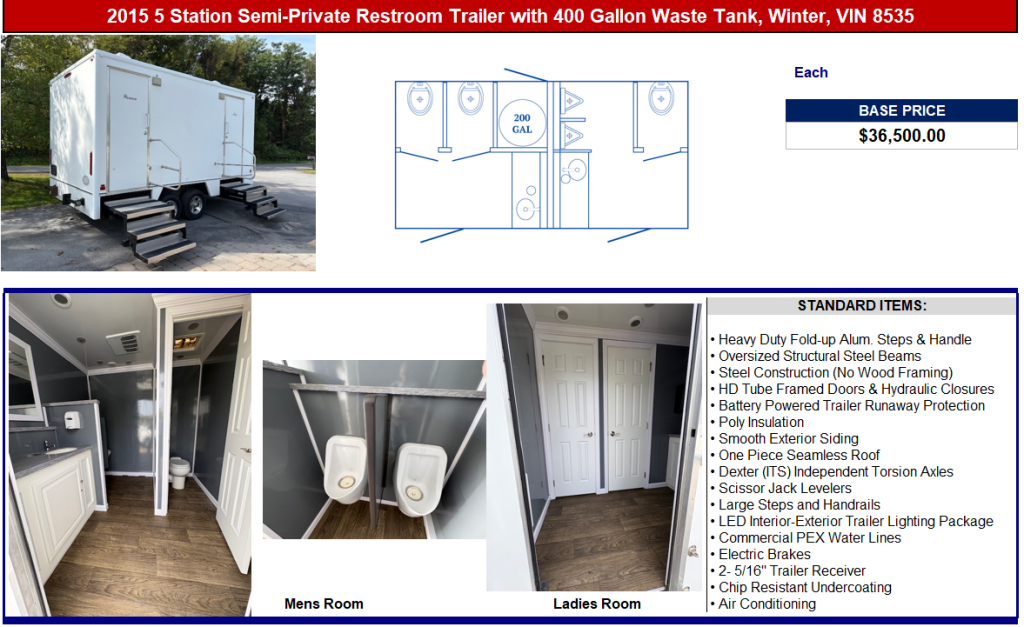
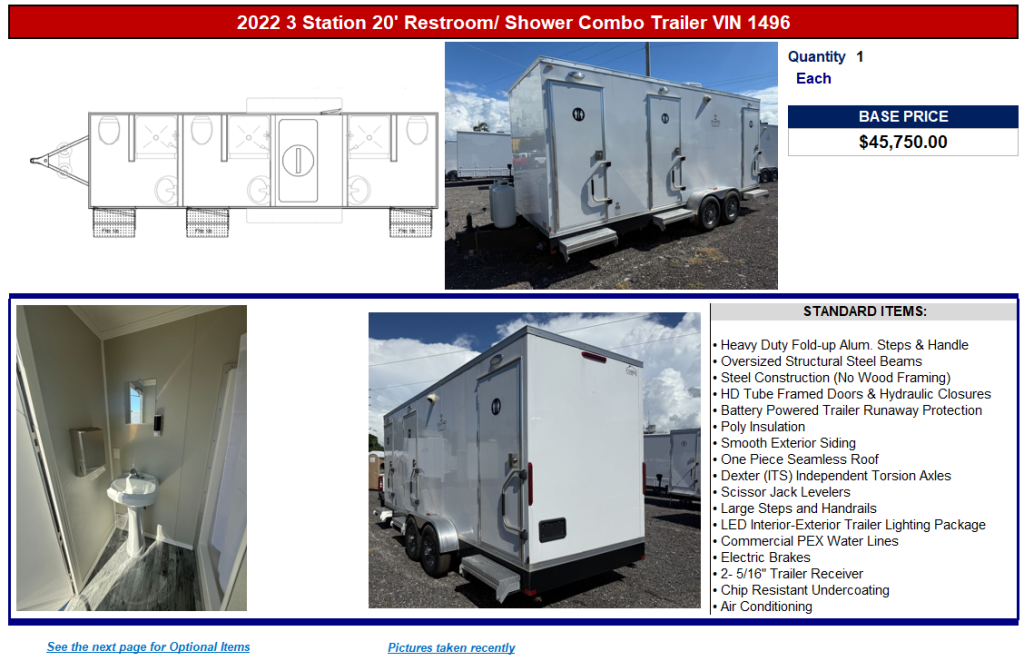
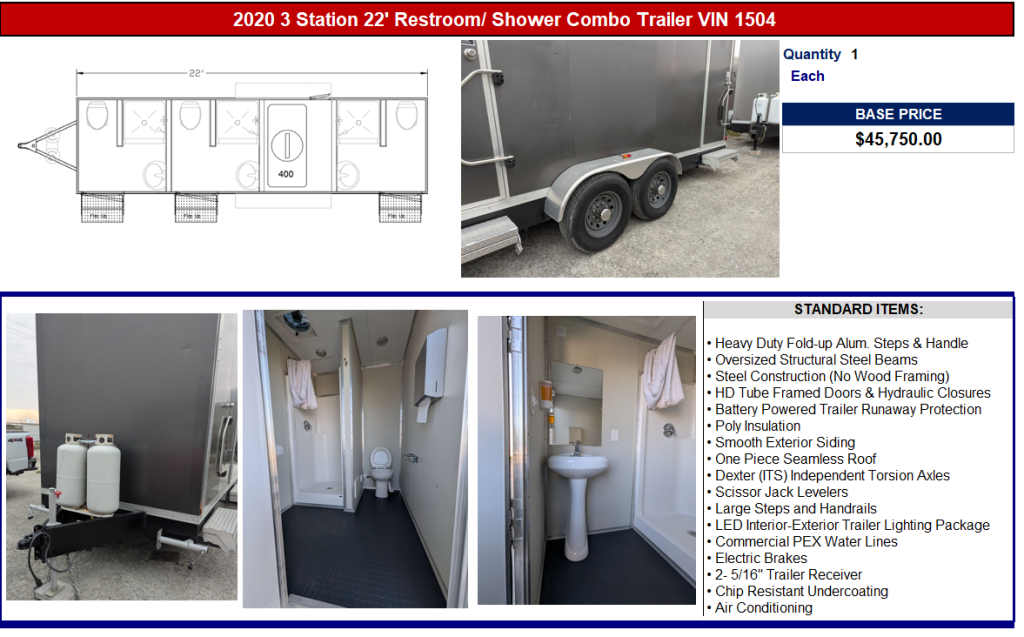
For purchase-side details, see new restroom trailers, pre-owned trailers, or our complete restroom trailers for sale hub.
Running the Numbers: A Practical Comparison
The buy-versus-rent math comes down to total cost of ownership versus total rental cost over a realistic time horizon. Most operators run a 3 to 5-year comparison.
Cost Inputs for Renting
- Per-event or per-deployment rental fees — varies by trailer size and rental duration
- Delivery and pickup costs — usually charged separately
- Setup and connection services
- Cleaning and service fees
- Damage or excess-use fees
- Peak-season pricing premiums
Cost Inputs for Owning
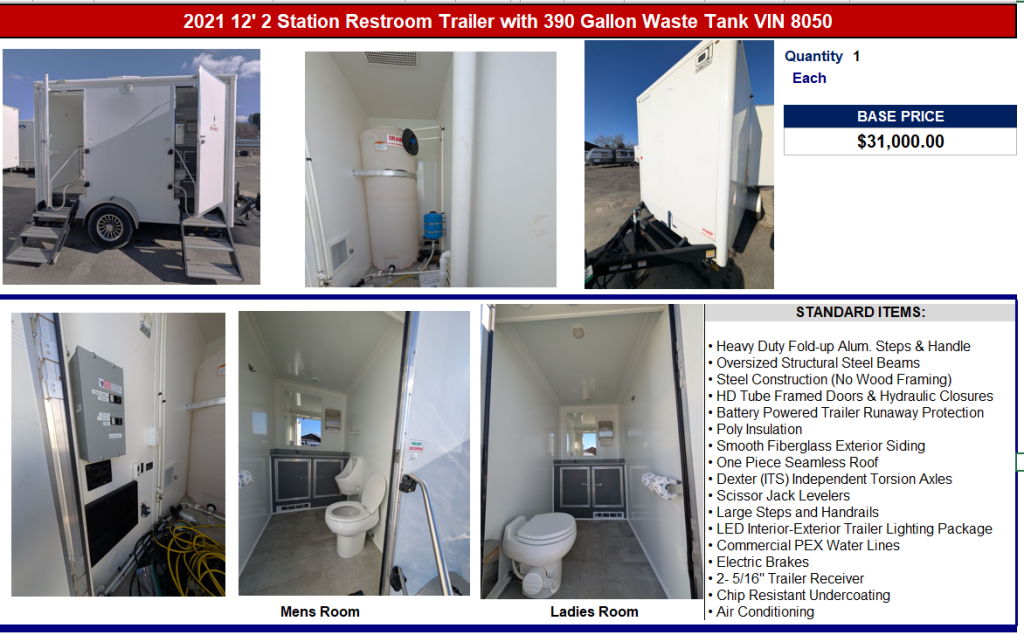
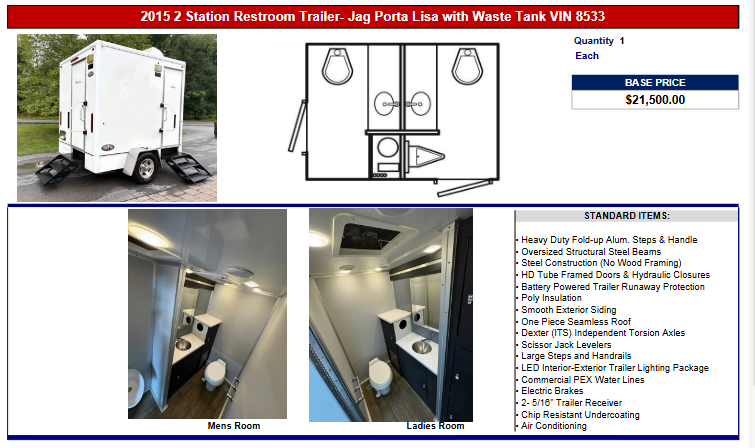
- Purchase price — new or pre-owned
- Financing costs if applicable
- Storage between deployments
- Transport to and from deployments (you handle this yourself or pay a third party)
- Routine maintenance and servicing — see our restroom and shower trailer maintenance guide
- Repairs and parts over time
- Insurance
- Resale value at end of useful life (offsets total cost)
The Break-Even Math
The rough framework: divide the purchase price of the trailer by the typical per-deployment rental cost. That tells you how many deployments it takes to recoup the purchase price.
From there, factor in storage, transport, maintenance, and insurance costs of ownership against delivery, pickup, and service costs of rental. For most operators with steady use, ownership breaks even somewhere between deployment 20 and deployment 40 — usually within 2-3 years for active operators.
After break-even, every additional deployment is dramatically cheaper than rental. That’s why high-frequency operators almost always buy.
The Hybrid Approach: Own and Rent
Many operators don’t pick one approach — they use both strategically.
A common pattern: own a base fleet sized to predictable demand, and rent additional units during peak periods or for one-off large events that exceed your owned capacity. This is particularly common with:
- Event rental companies that own their core inventory and rent additional units for major events or peak seasons
- General contractors that own units for long-running projects and rent for shorter or remote jobs
- Government agencies that own primary response capacity and rent during major incidents
- Property managers that own units for predictable seasonal demand and rent for special events
The hybrid model gives you ownership economics on your baseline demand and rental flexibility on the variable part. For most operators with moderate-to-high use, this is the most cost-effective approach.
Other Factors That Affect the Decision
Beyond pure cost, a few operational factors influence the right call:
Tax Treatment
Rental fees are operating expenses, fully deductible in the year incurred. Purchases are capital expenditures, depreciated over time with different tax treatment. Talk to your accountant — depending on your structure, one approach may have meaningful tax advantages over the other.
Cash Flow Patterns
Renting smooths costs across the year, matching expense to use. Buying concentrates cost upfront (or in financing payments). Operators with seasonal cash flow sometimes prefer the rental model even when ownership would be cheaper, just to match expense to revenue timing.
Operational Capability
Owning a trailer means owning the operational responsibility for it — transport, setup, breakdown, cleaning, maintenance, repair. Some operators are well-suited to this; others would rather pay a premium to outsource it. Be honest about your team’s bandwidth before committing to ownership.
Market Volatility
Trailer rental markets have peaks and valleys. During high-demand periods, rental availability tightens and prices climb significantly. Operators that experienced rental shortages or pricing spikes during recent hurricane seasons, wedding seasons, or event surges often shift to ownership specifically to insulate against market volatility.
Talk to Our Team About Your Operation
If You Decide to Buy: New or Pre-Owned?
Once you’ve decided ownership is the right call, the next question is whether to buy new or pre-owned. The short version:
- Pre-owned wins on price and delivery timeline, with reduced customization options
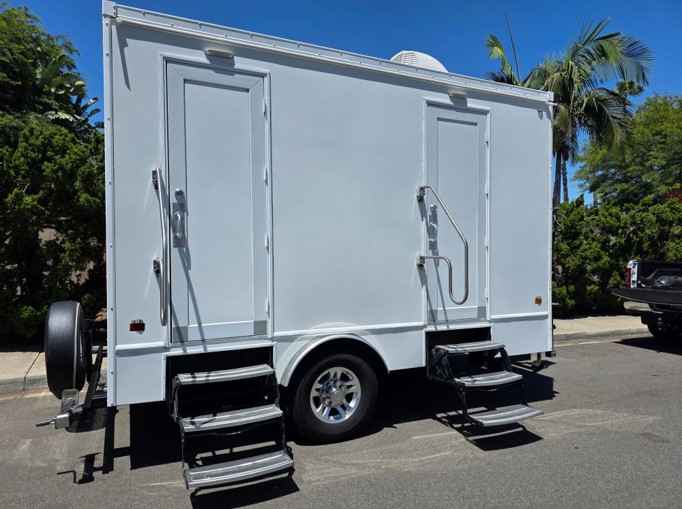
- New wins on warranty, customization, and predictable long-term performance
For a deeper walkthrough of that decision — including what to inspect on a used trailer and when each path makes sense — see our complete guide on used vs. new restroom trailers: what to inspect before you buy.
If You Decide to Rent: What to Look for in a Rental Partner
Not every rental provider operates the same way. When evaluating rental partners, key factors include:
- Inventory range and configuration availability — single configuration or multiple options to match different use cases
- Delivery and setup capability — coordinated nationwide delivery vs. customer pickup only
- Service and maintenance during rental — what happens if a system fails mid-deployment
- Insurance and damage policies — clear terms vs. ambiguous fees
- Pricing transparency — all-in pricing vs. base rate plus surprise add-ons
- Specialized program support — government, non-profit, university, and corporate rental terms
NRT’s rental program covers nationwide delivery from facilities in Murfreesboro, TN and West Seneca, NY, with coordinated transport, setup, and pickup. See our specialty trailer rental program for full details.
Frequently Asked Questions About Buying vs. Renting
At what point does buying become cheaper than renting?
For most operators with steady use, ownership breaks even somewhere between 20 and 40 deployments — typically within 2-3 years of consistent use. After break-even, every additional deployment is dramatically cheaper than rental. The exact crossover depends on purchase price, rental rates in your market, and your operational costs for ownership. Run the math against your specific use frequency before committing.
What hidden costs should I consider when comparing buy vs. rent?
On the ownership side: storage between deployments, transport costs, routine maintenance, repairs, insurance, and the time investment of managing the unit. On the rental side: delivery and pickup fees, setup charges, cleaning fees, damage policies, and peak-season pricing premiums. The sticker comparison rarely tells the full story — both directions have costs beyond the headline number.
Can I rent a restroom trailer for a long-term deployment?
Yes. NRT offers long-term rental programs for deployments running months to years. Long-term rental rates are typically discounted from short-term event pricing, and the program is built around extended placement on construction sites, government deployments, and ongoing operations. For some long-haul use cases, long-term rental still beats ownership when factoring in capital commitment, maintenance, and operational responsibility.
Is it cheaper to buy used and skip renting entirely?
Often yes, if you’re certain you’ll use the trailer enough to justify it. A pre-owned trailer purchased for the cost of 10-15 rental deployments can pay for itself quickly with consistent use. The risk is that pre-owned trailers carry inherited wear and potential hidden issues — buying smart means inspecting carefully or buying from a reputable dealer that has already inspected and refurbished the unit. See our used vs. new inspection guide for more on this.
Does NRT offer financing on trailer purchases?
Financing options vary by buyer type, trailer configuration, and purchase terms. Contact our sales team directly to discuss financing arrangements for your specific situation. Many of our buyers structure purchases to align with their operational cash flow rather than paying full price upfront.
What about the hybrid approach — own some, rent some?
The hybrid model is one of the most common patterns we see with active operators. Own a base fleet sized to predictable demand, rent additional units for peak periods, special events, or surges that exceed owned capacity. This gives you ownership economics on your baseline and rental flexibility on the variable part. For most operators with moderate-to-high use, hybrid is the most cost-effective approach.
Can I rent first to test if buying makes sense?
Absolutely. Many operators rent for the first 6-12 months while building demand or testing operational fit, then transition to ownership once usage patterns stabilize. Renting first is a low-risk way to validate the business case before committing capital. Our team can help structure both rental and eventual purchase paths.
Does NRT serve both rental and purchase customers nationwide?
Yes. NRT delivers both rental and purchase units nationwide from facilities in Murfreesboro, Tennessee and West Seneca, New York. Whether you’re buying outright or renting for a specific deployment, we coordinate transport, on-site placement, leveling, and connection support. See our service areas page for regional coverage details.
Get Help Deciding Which Path Is Right for You
Whether you’re leaning toward buying, renting, or a hybrid approach, our team can help you run the numbers and figure out the right move for your operation. Request a quote or contact our team directly with your use frequency, deployment patterns, and operational needs — we’ll give you straightforward recommendations on the path that makes the most sense for your situation.