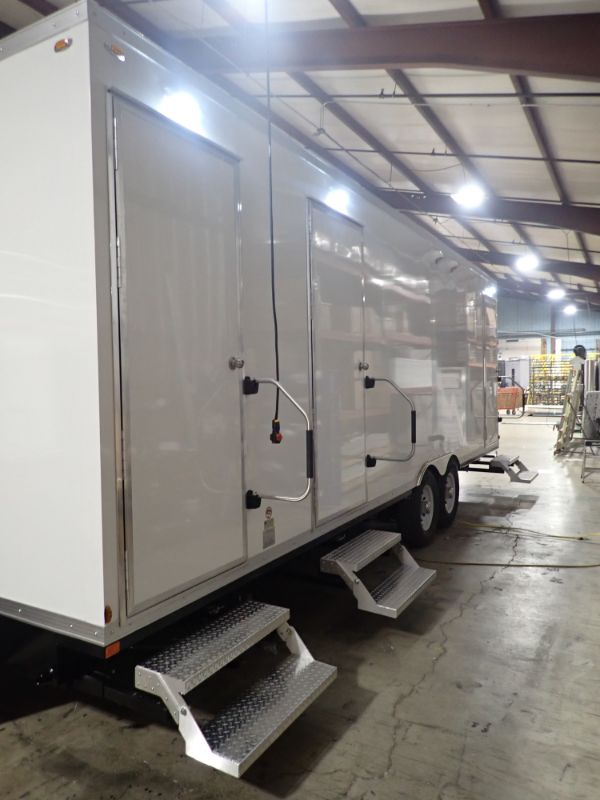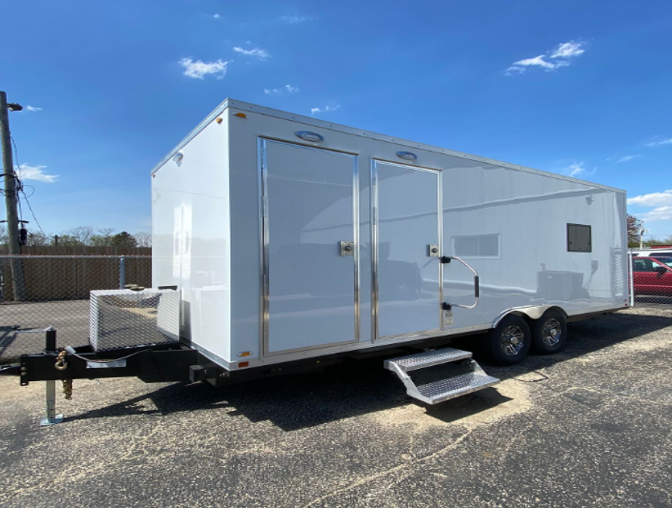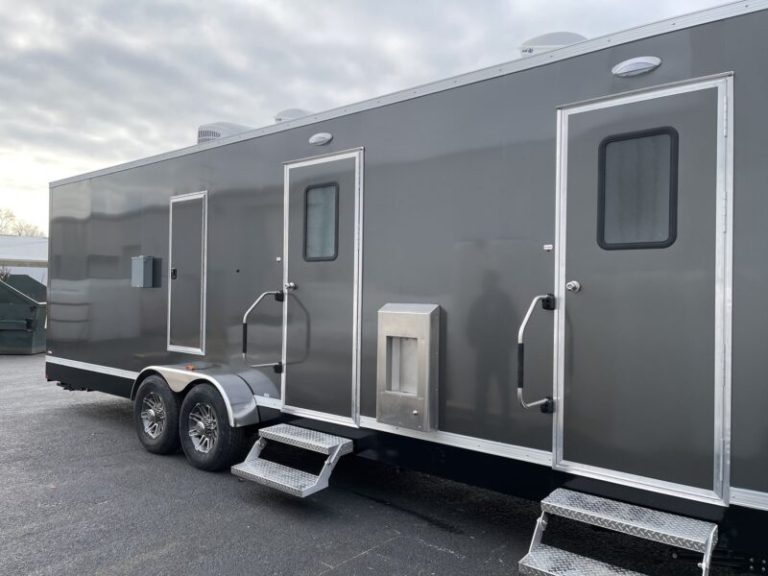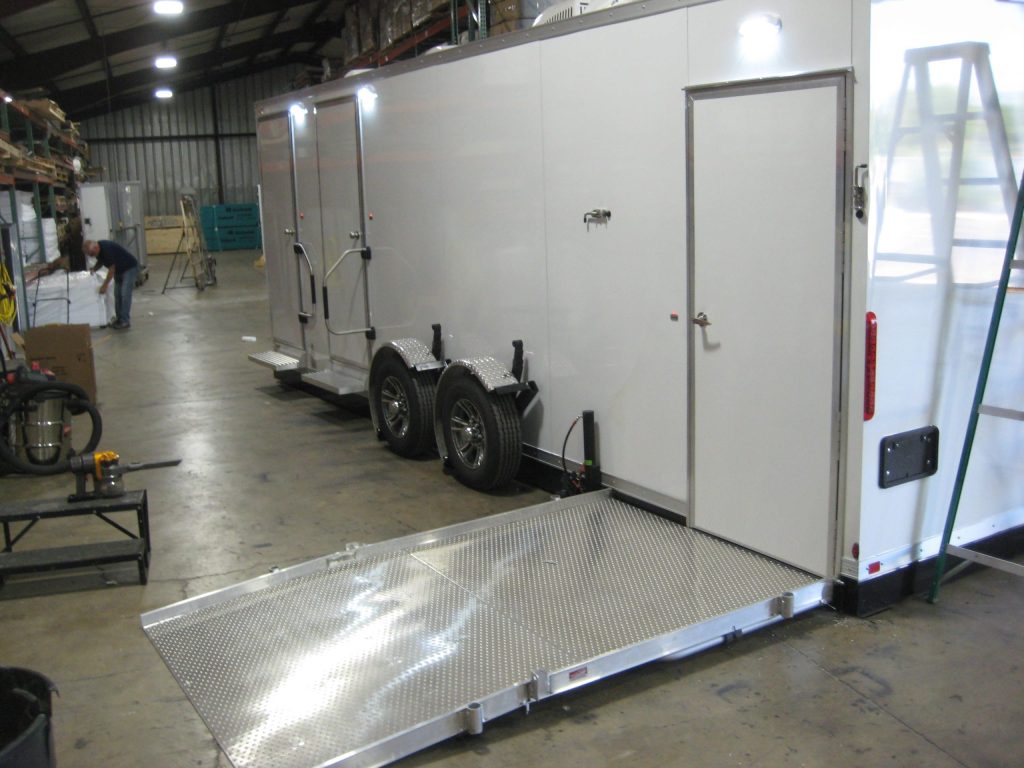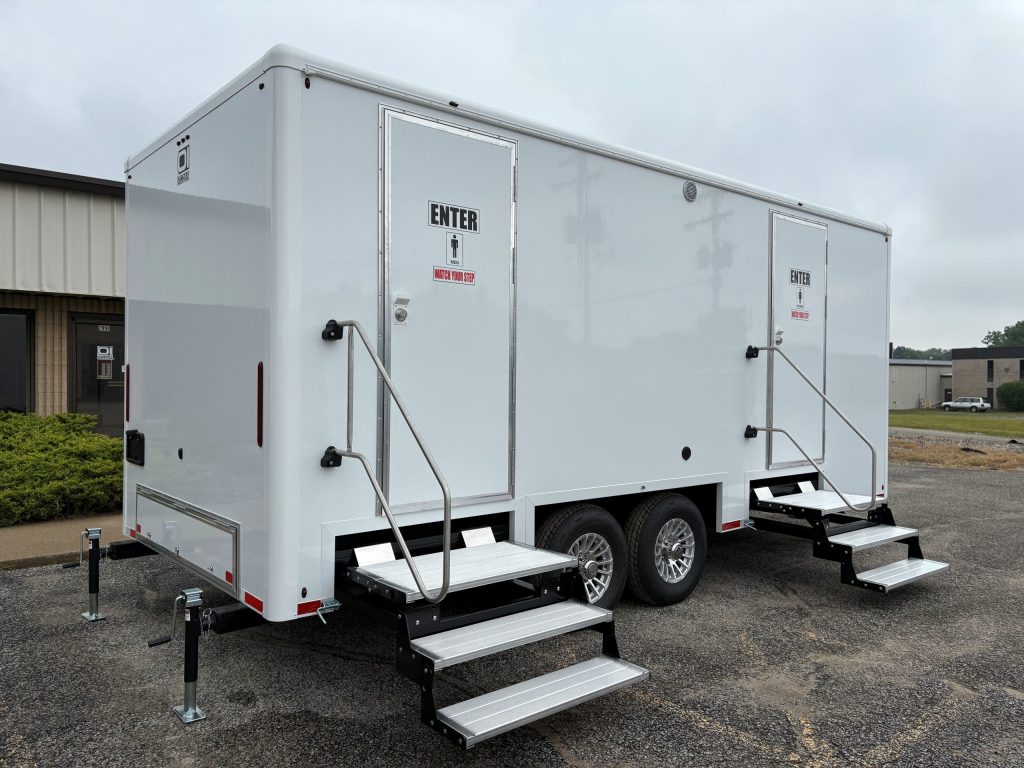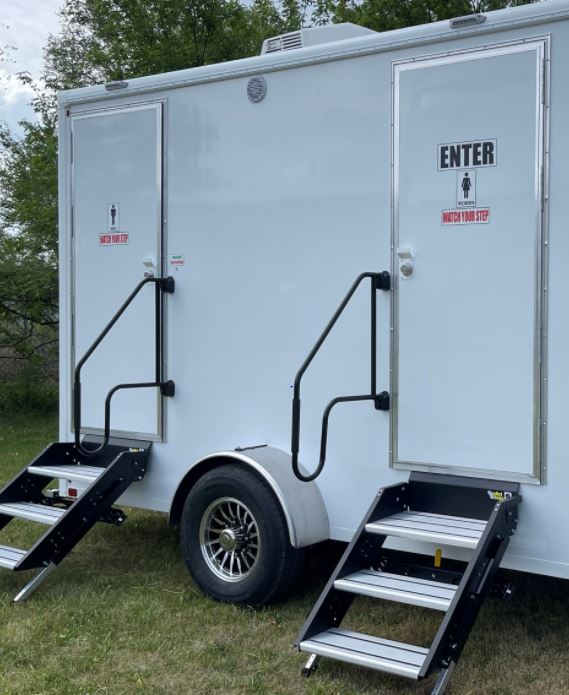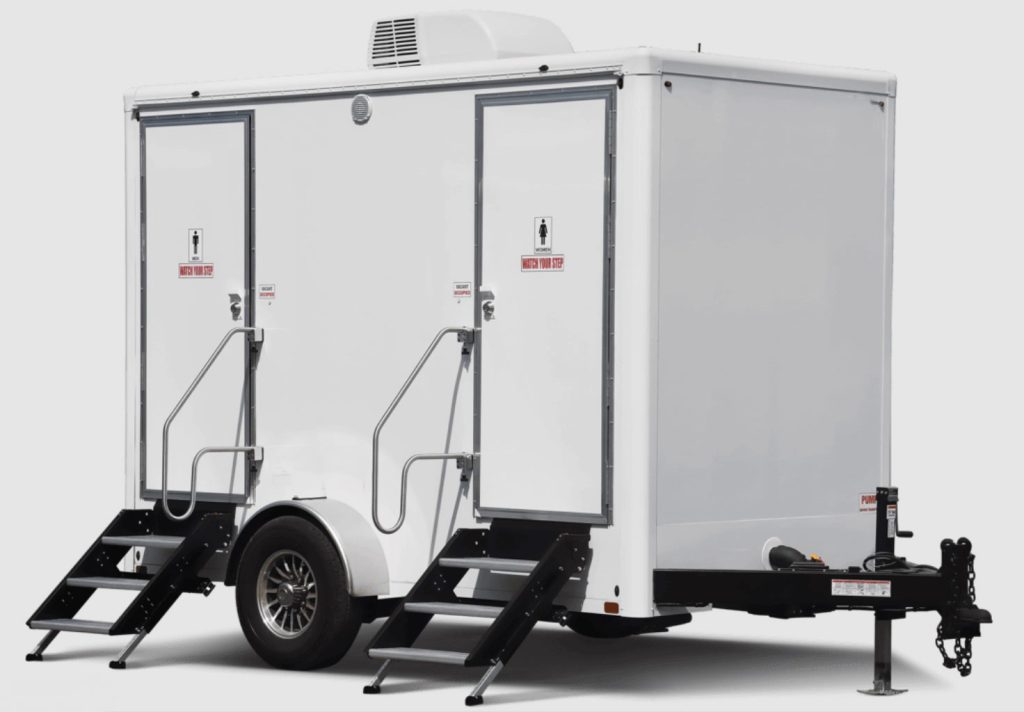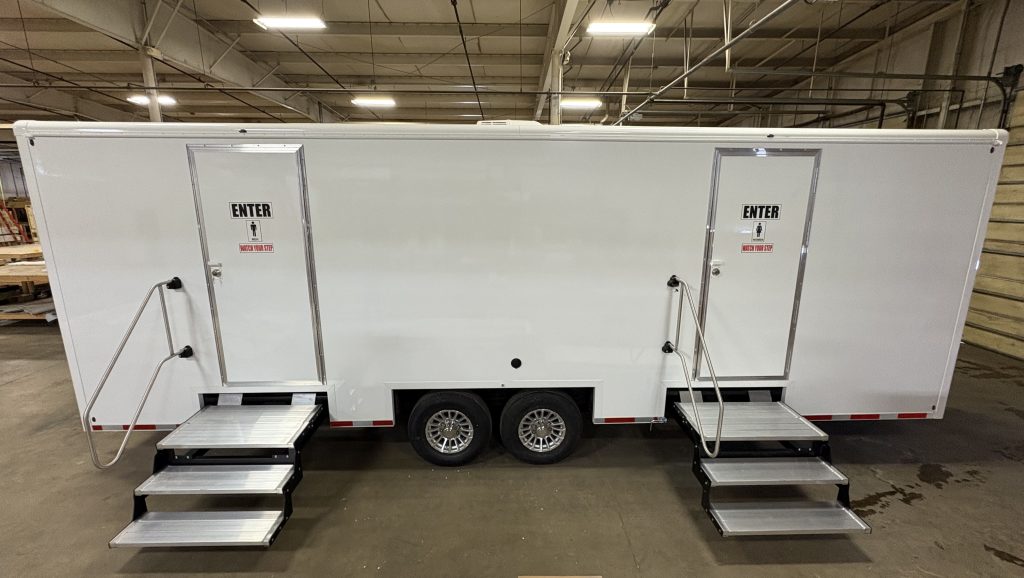
What Is a Mobile Command Trailer?
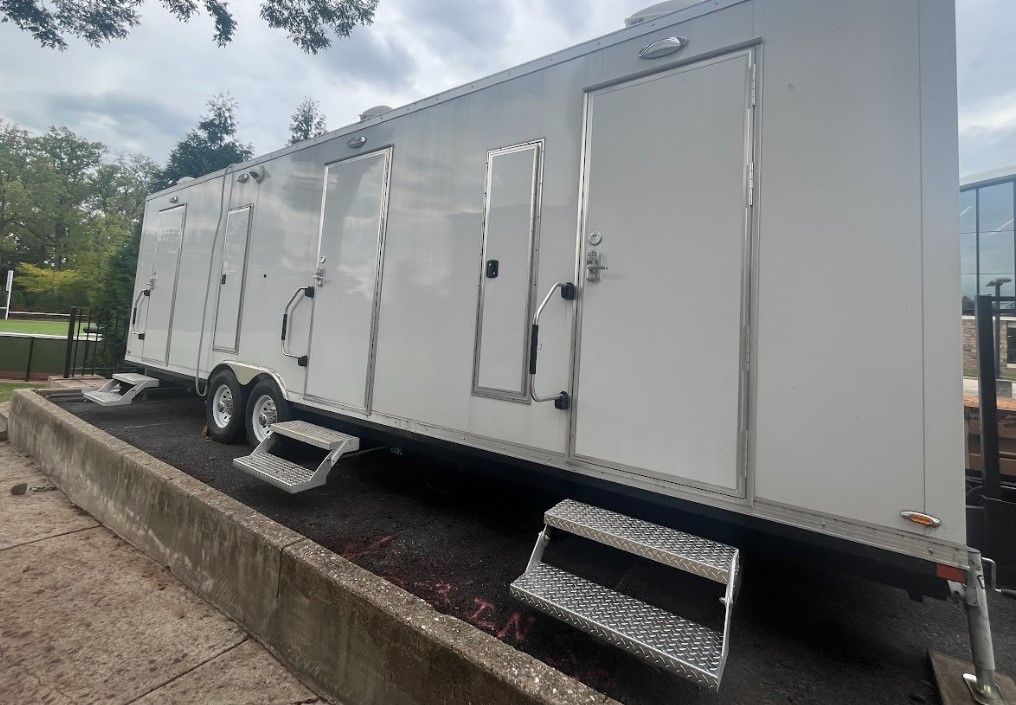
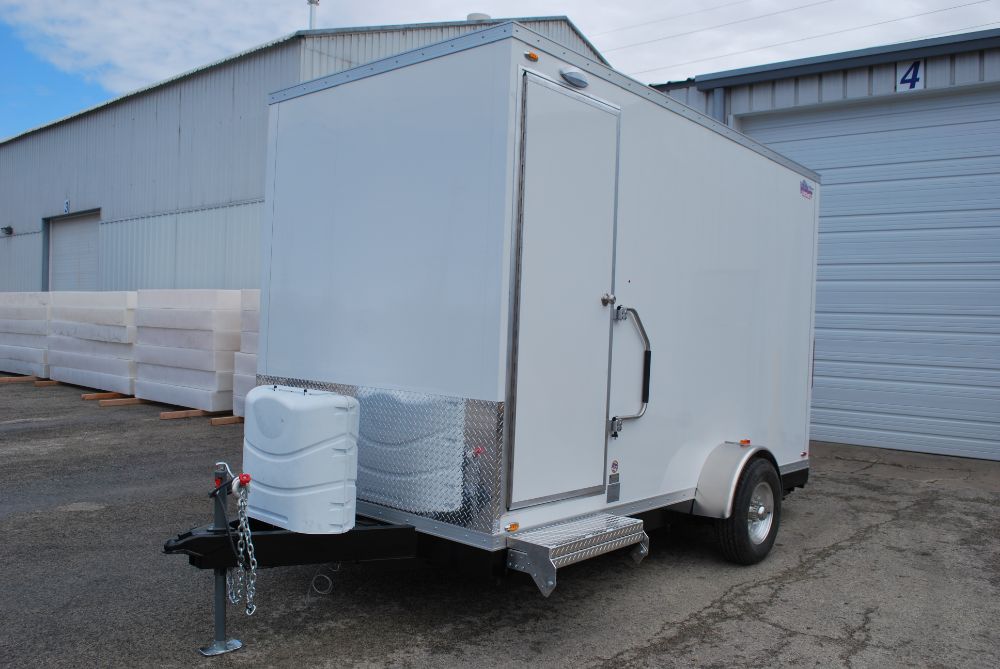
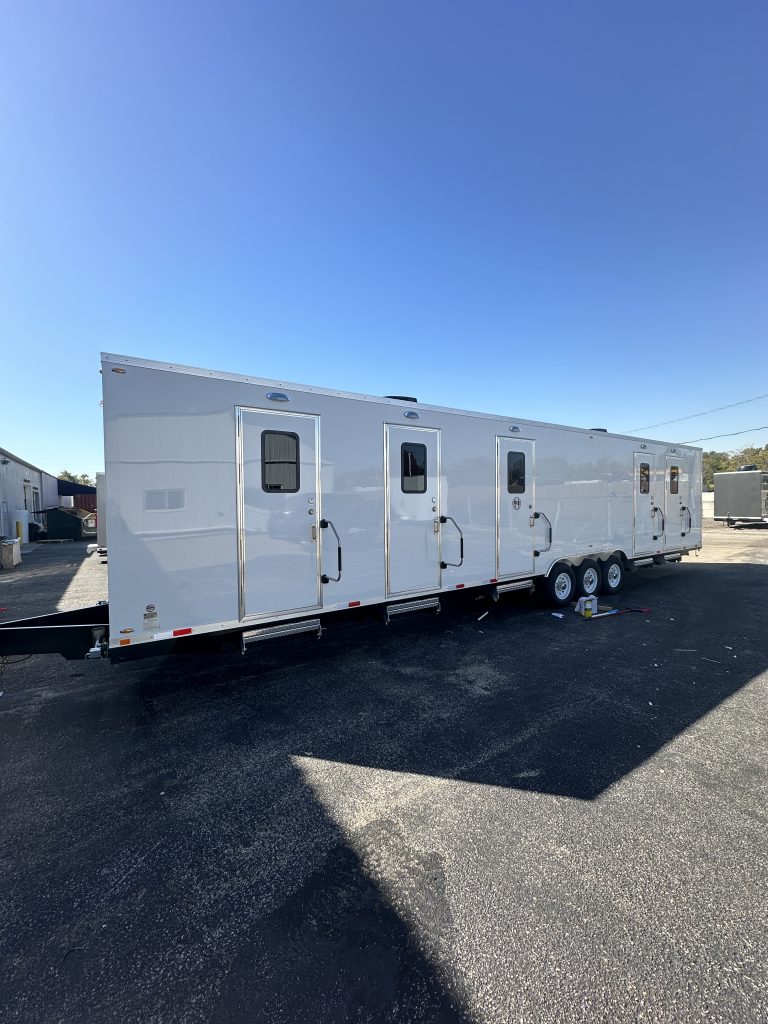
A mobile command trailer is a self-contained, deployable workspace built to support incident command, emergency operations, and coordinated tactical activity. It gives responders, agency leaders, and field commanders a functional operations center wherever the incident happens — without depending on existing buildings, permanent facilities, or improvised setups.
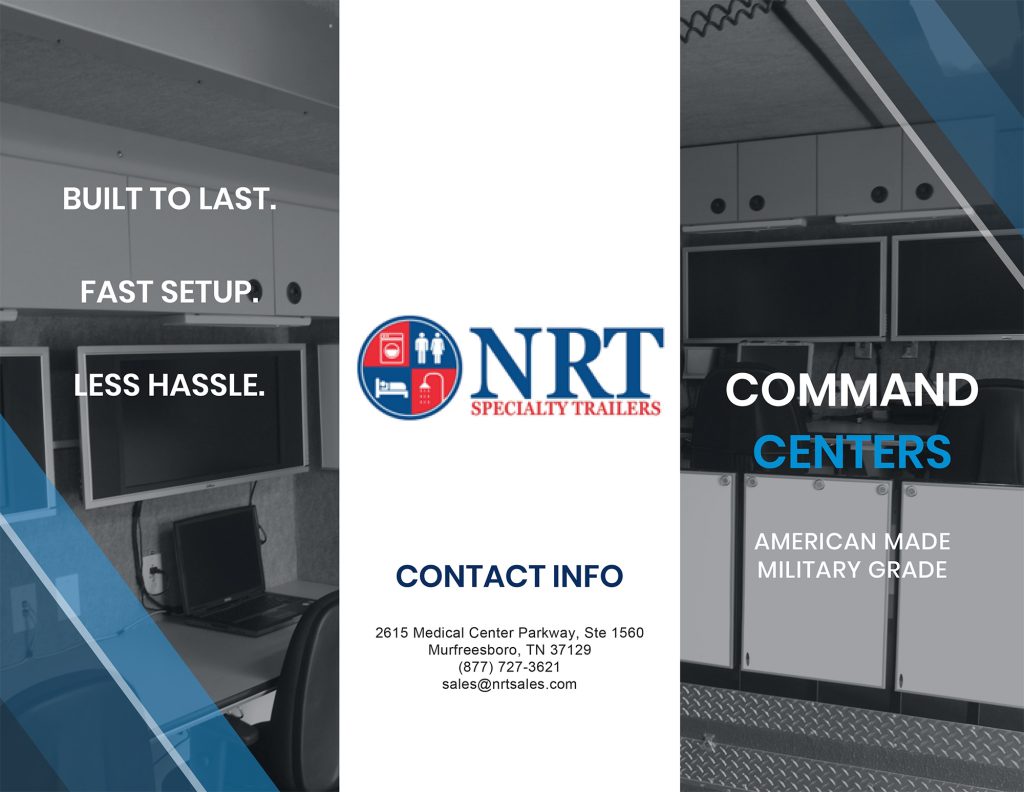
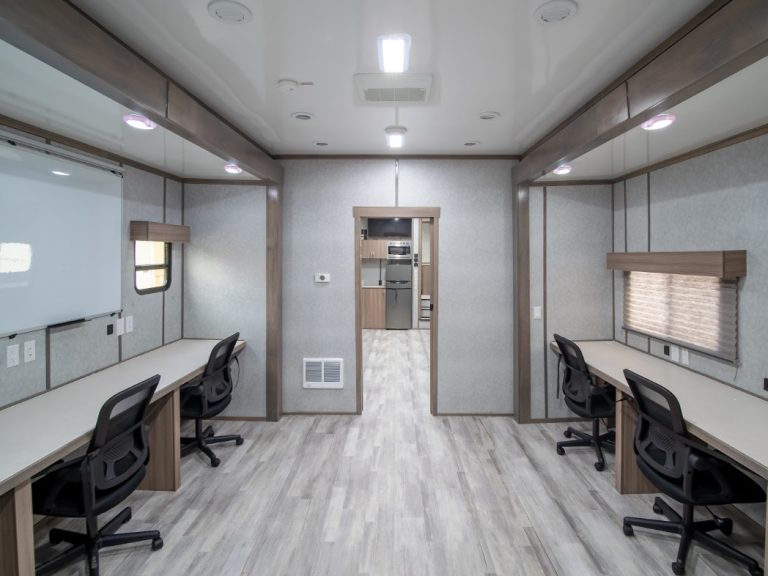
Inside a typical command trailer, you’ll find multi-station workspaces with desks and chairs, communications wiring infrastructure for radio and satellite gear, full electrical service with generator and shore power options, climate control, lighting, and briefing space. Some units include onboard restrooms, plan tables, and dedicated positions for operations, planning, logistics, and communications. The trailer is built to roll into a staging area, get leveled and connected, and start operating immediately.
For broader product context, see our pages on mobile command trailers and office and command center trailers.
Why Agencies Use Mobile Command Trailers
Permanent emergency operations centers are essential, but they don’t always solve the problem of running an incident in the field. A wildfire burning 80 miles from the nearest EOC, a tactical operation in a remote part of a county, a hurricane response staged at a coastal landing site, or a multi-day public event — none of these can be effectively commanded from a building back at headquarters.
Mobile command trailers fill that gap. They give agencies the ability to:
- Bring command-level infrastructure directly to the incident site
- Run coordinated operations across multiple agencies in one shared space
- Support extended deployments without burning out responders in vehicles or improvised setups
- Maintain communications continuity during power outages, infrastructure failures, or remote operations
- Scale up command capacity quickly when an incident exceeds normal operations
The difference between a command trailer and an improvised setup — a folding table under a tent, or a packed SUV — is the difference between coordinated operations and reactive scrambling.
Who Uses Mobile Command Trailers
Mobile command trailers are deployed across a wide range of agencies and operations. The most common users include:
Emergency Management Agencies
County, state, and federal emergency management offices use mobile command trailers as deployable extensions of their EOCs. When an incident requires on-scene presence — hurricane landfall, flood response, large-scale evacuation, or a federal disaster declaration — the command trailer becomes the operational hub. For related applications, see our pages on disaster relief and hurricane response.
Law Enforcement Agencies
Local, state, and federal law enforcement agencies deploy command trailers for tactical operations, large-event security, extended investigations, and multi-jurisdictional operations. The trailer provides a secure, climate-controlled workspace for tactical commanders, intelligence coordination, and operations planning — close enough to the scene to be useful, far enough away to be protected.
Fire Departments and Wildfire Response Teams
Fire departments use mobile command trailers for incident command on structure fires, multi-alarm response, and hazmat operations. Wildfire response teams rely on them for base camp operations, multi-agency fire camp coordination, and extended incident deployment timelines. See our wildfire relief page for more on extended fire response operations.
Federal Agencies
FEMA, military, and federal response operations use deployable command infrastructure for major disaster declarations, federal exercises, and large-scale coordinated response. Federal use cases typically require larger configurations, more workstations, and integration with multi-agency operations.
Utilities and Infrastructure Operators
Power, water, and telecom companies deploy command trailers for storm restoration, infrastructure incidents, and extended emergency response. When a major storm knocks out service across a region, the utility’s restoration operation typically runs out of a mobile command center deployed near the impact zone.
Public Health and Mass Care Operations
Public health agencies use mobile command trailers for vaccination operations, mass-casualty incident response, and coordinated public health emergencies. The trailer becomes the operational center for the response team, with workspace, communications, and coordination capacity for extended operations.
[Insert notable agency clients and deployment examples here — e.g., specific EM agencies, federal partners, or named incidents NRT trailers have supported.]
Common Mobile Command Trailer Configurations
Not every incident needs the same command infrastructure. The configuration that works for a tactical law enforcement operation is different from what a multi-day wildfire camp requires. NRT builds command trailers across configurations that match how agencies actually operate.
- Single-room command trailers for incident command, on-scene supervision, and tactical operations. Compact footprint, fast deployment, ideal for shorter-duration operations.
- Multi-workstation command centers with dedicated positions for operations, planning, logistics, and communications. Built for incident command system (ICS) structure with separate workspaces for each command function.
- Command + briefing room configurations with a separate room for team briefings, situation updates, and media coordination. Common for multi-agency operations and federal-level incidents.
- Base camp command trailers for extended deployments with integrated rest, restroom, or shower capability. Designed for incidents running days to weeks where responders need to rotate through the same trailer for command and rest.
- Multi-trailer command and operations setups combining command center, base camp, restroom, shower, and bunkhouse trailers for full-scale incident operations.
For permanent purchase, see custom command center builds. For incident-driven rental needs, see our mobile command center rentals.
What’s Inside a Command Trailer
The interior of a command trailer is built around the work that happens inside it. Standard features across most configurations include:
- Multi-station workspaces with desks, chairs, and integrated power and data drops
- Wiring infrastructure for radio, satellite, and broadband communications equipment
- Full electrical service with generator and shore power options
- HVAC for sub-zero through extreme heat operation
- Interior and exterior LED lighting, with scene lighting on select units
- Whiteboards, plan tables, and briefing space on multi-room configurations
- Secure entry doors and weather-sealed windows
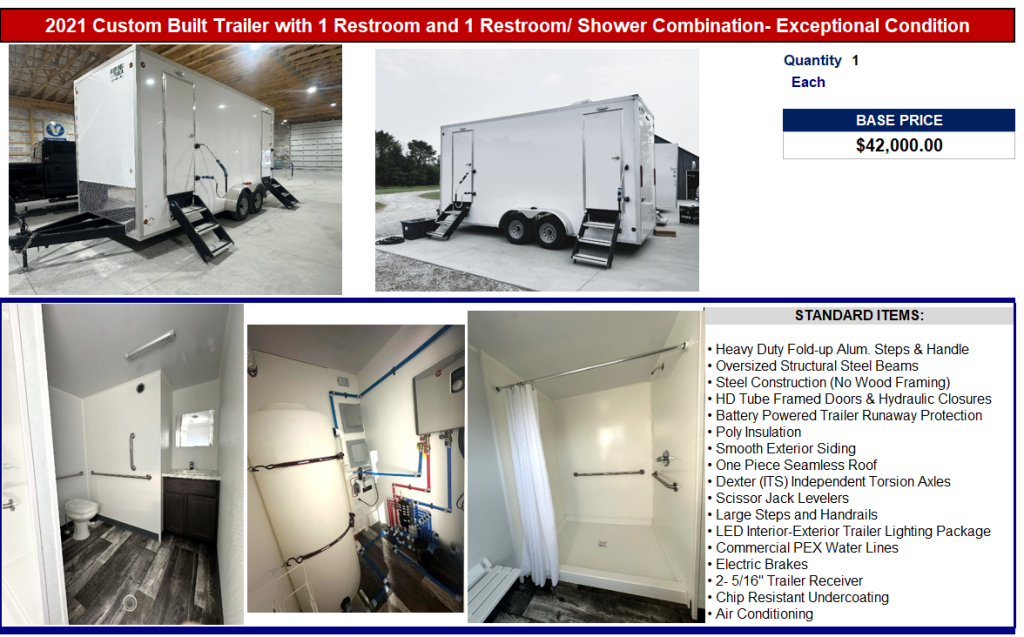
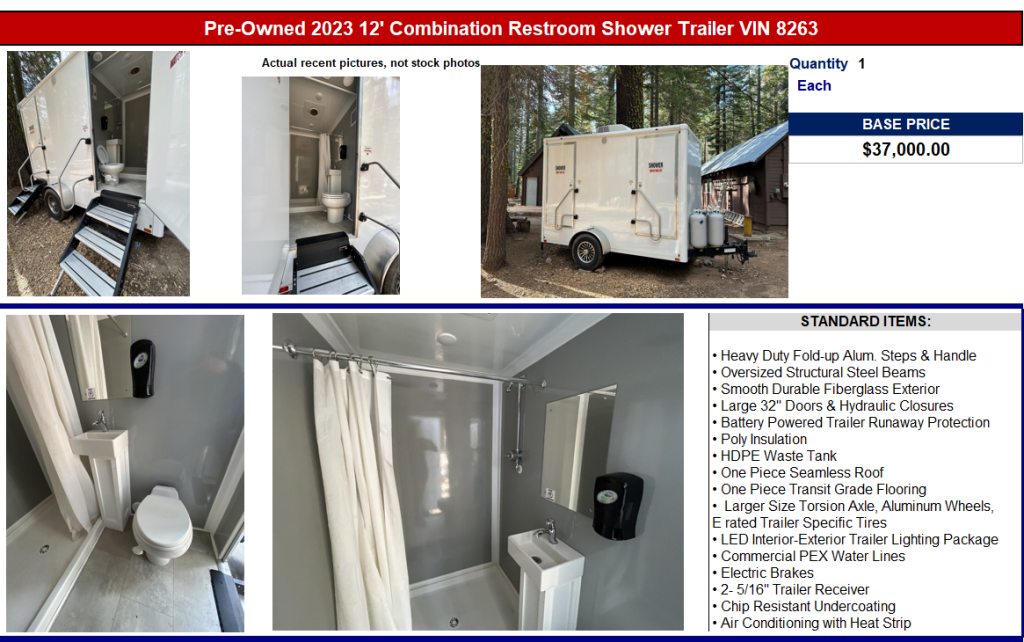
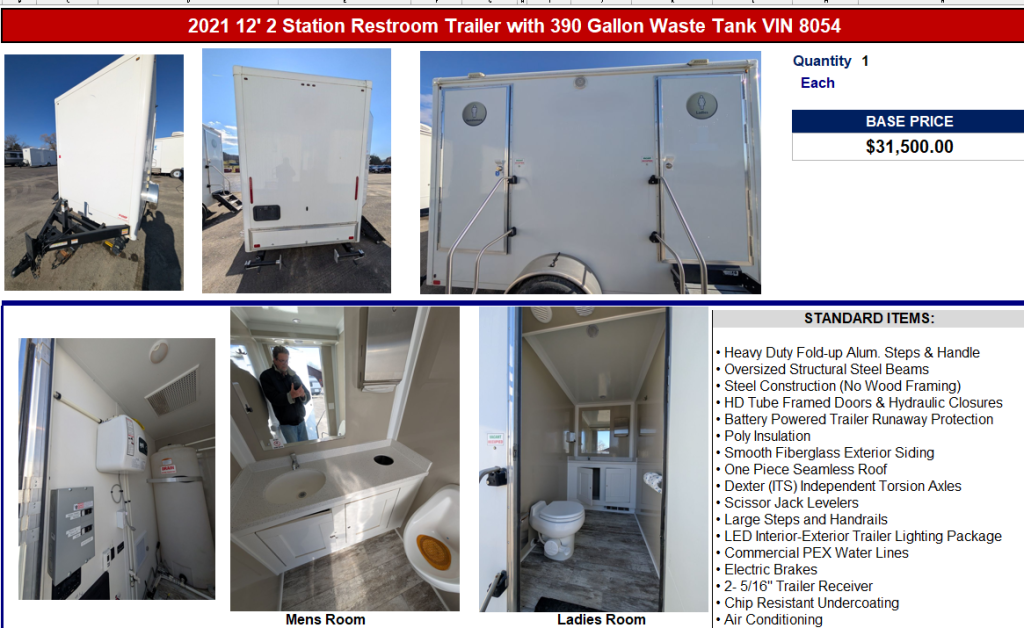
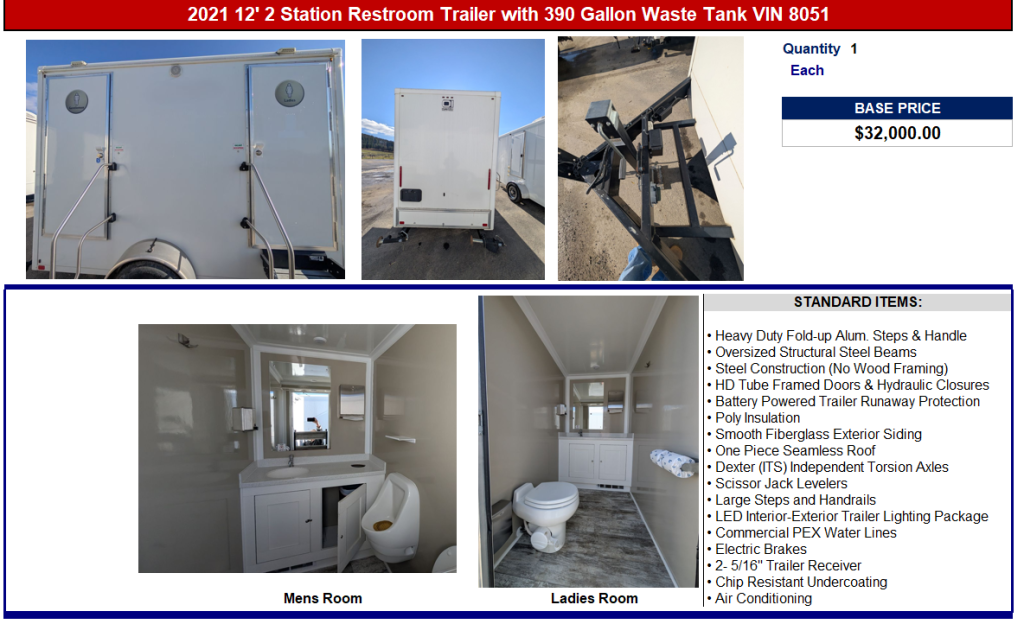
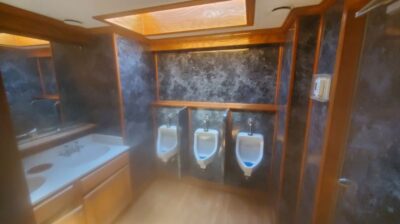
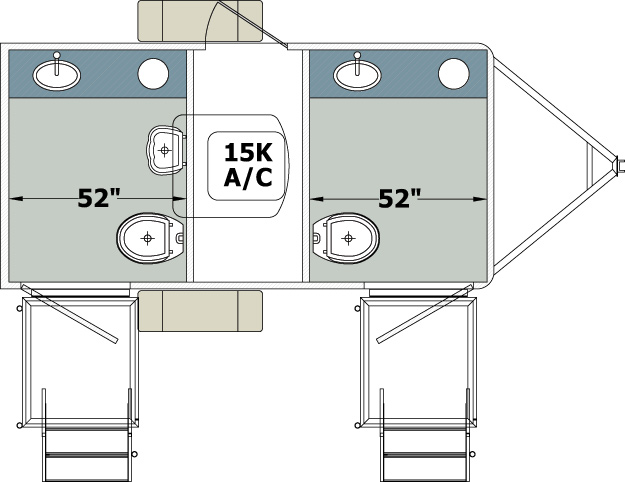
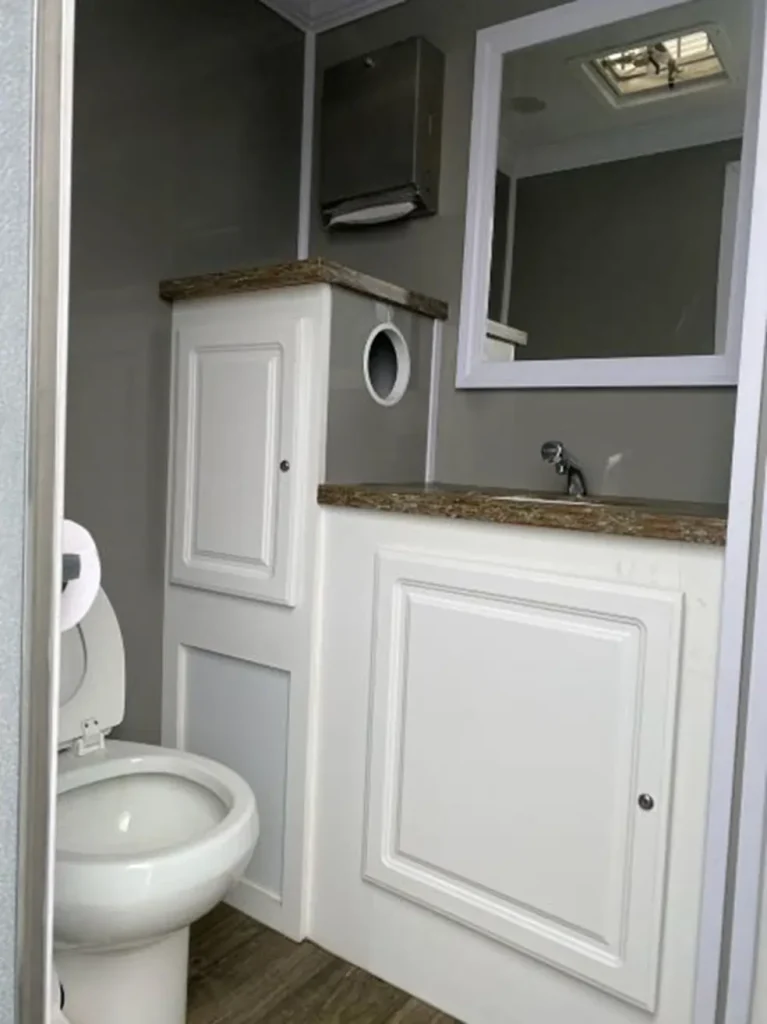
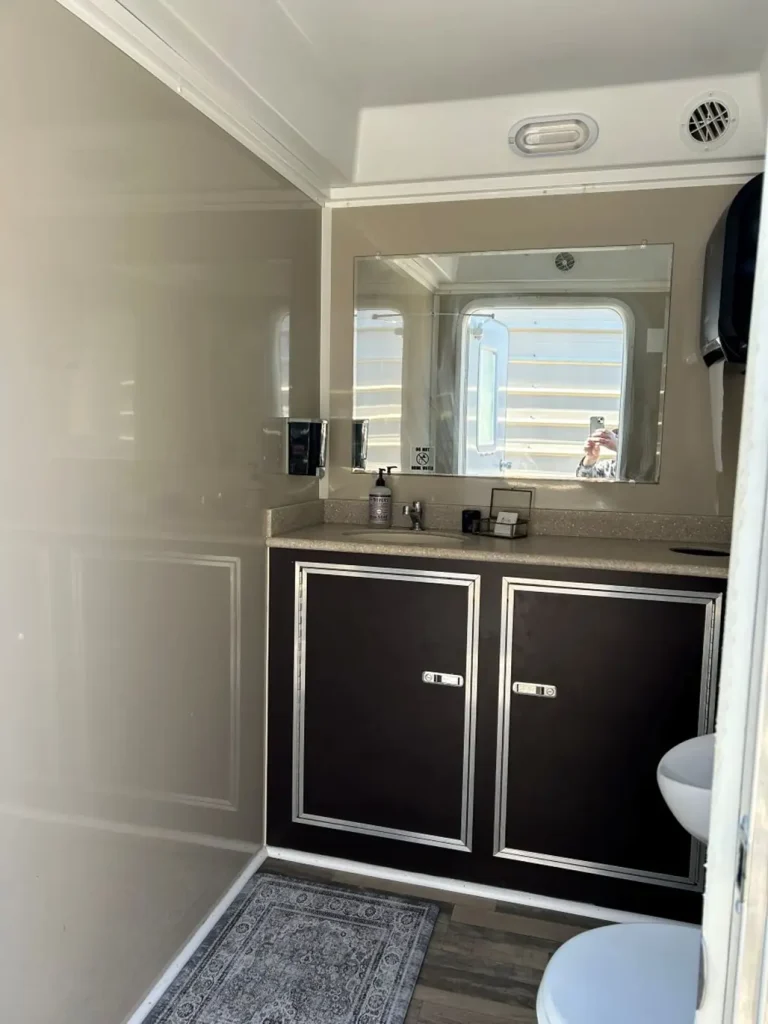
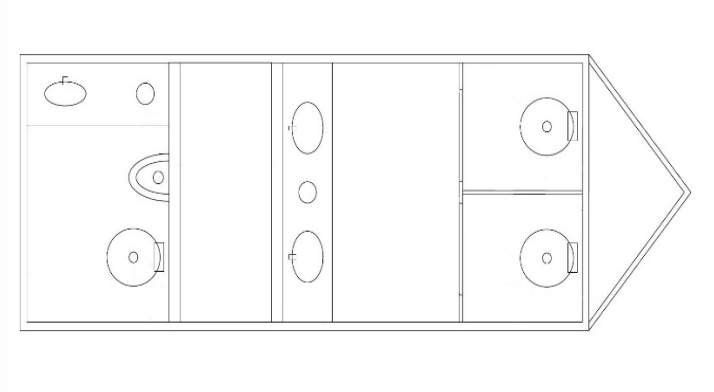
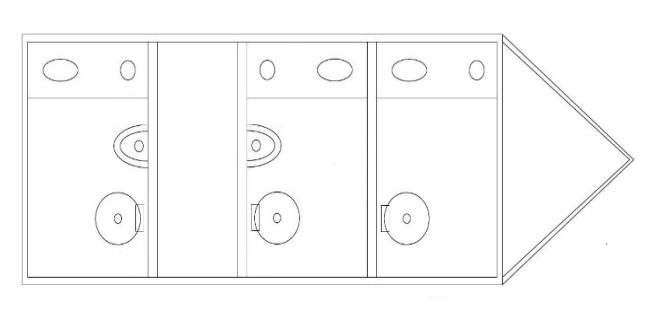
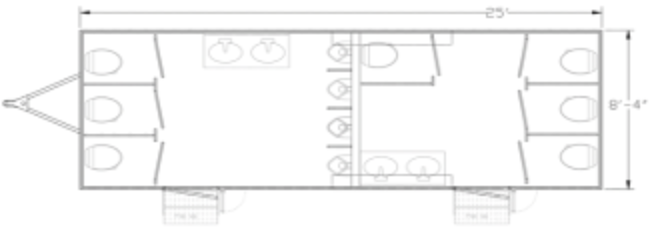
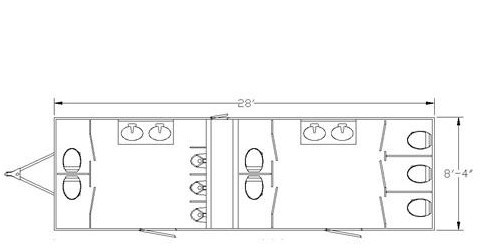
- Onboard restroom on select configurations for extended operations
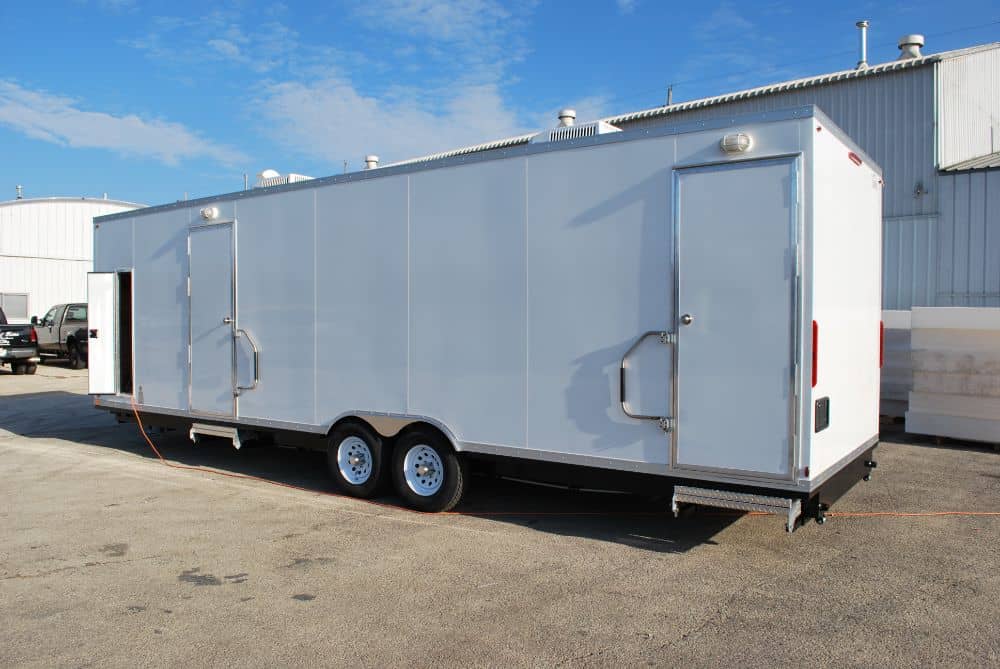
- Reinforced steel frame and exterior for repeated transport and rough-terrain placement
Most agencies supply their own radios, antennas, computers, and incident-specific equipment. The trailer provides the infrastructure — wiring, power, workspace, and shelter — that the gear plugs into.
Mobile Command Trailers vs. Other Specialty Trailers
The emergency response trailer category covers more than just command centers. A few of the most common related trailer types and how they work alongside command operations:
- Base camp trailers — responder rest, sleeping accommodations, and personnel staging for extended deployments
- Bunkhouse trailers — sleeping accommodations for crews on multi-day operations
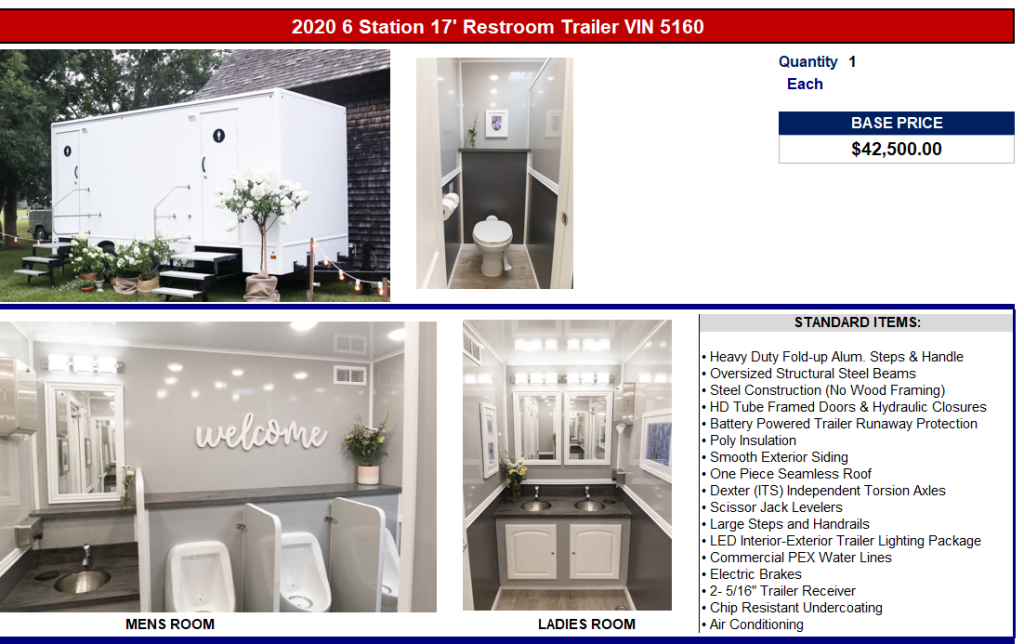
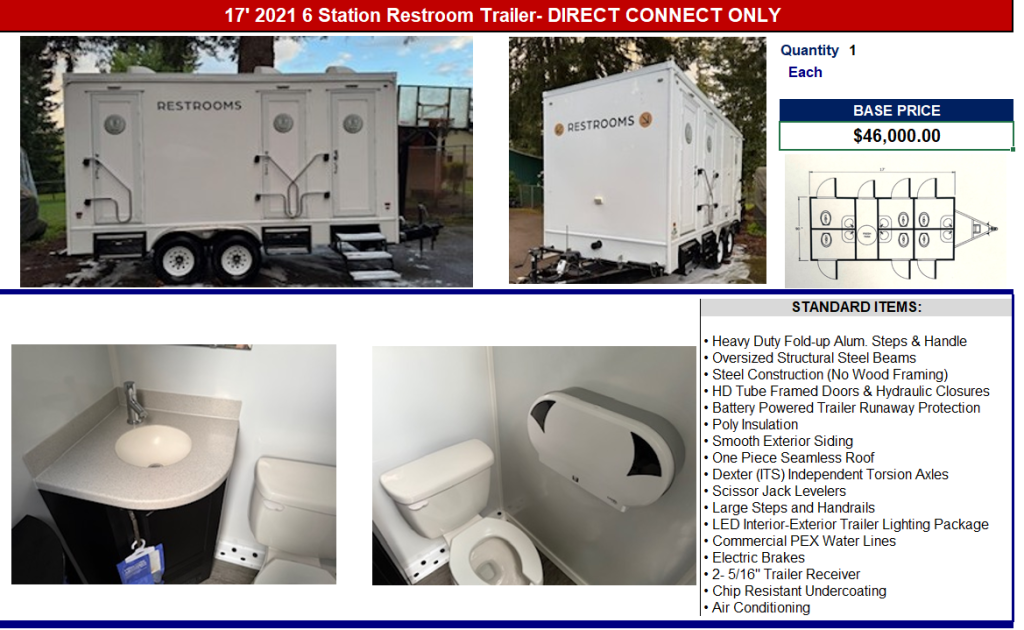
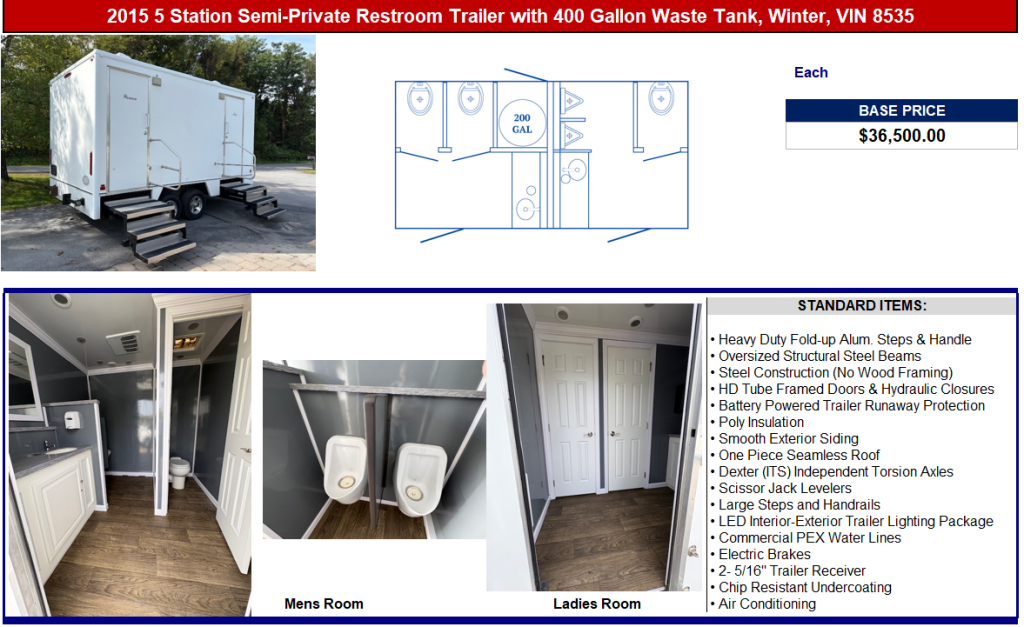
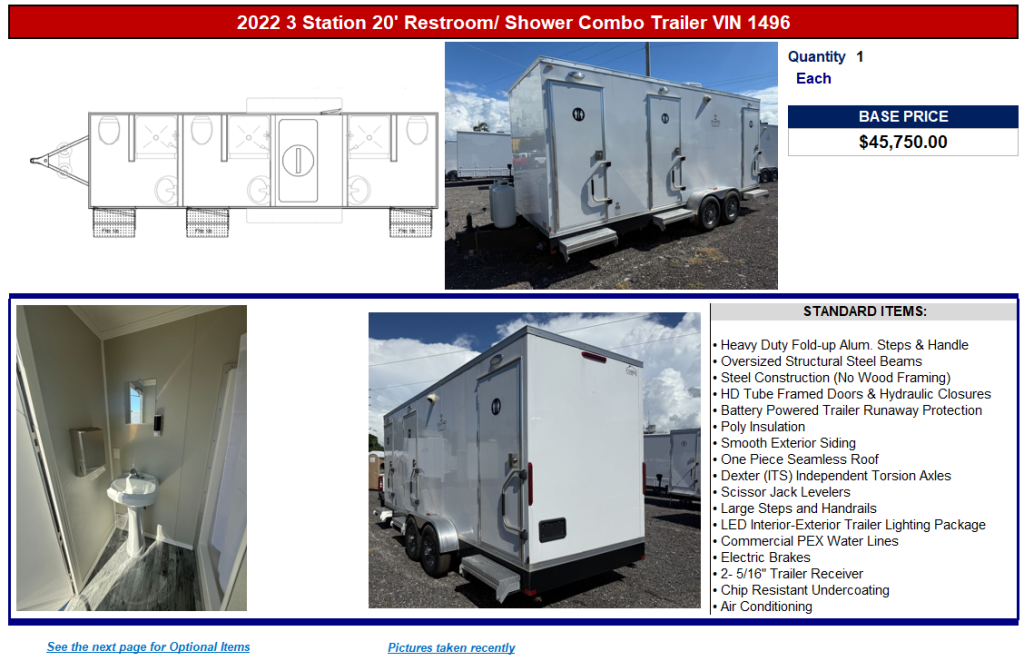
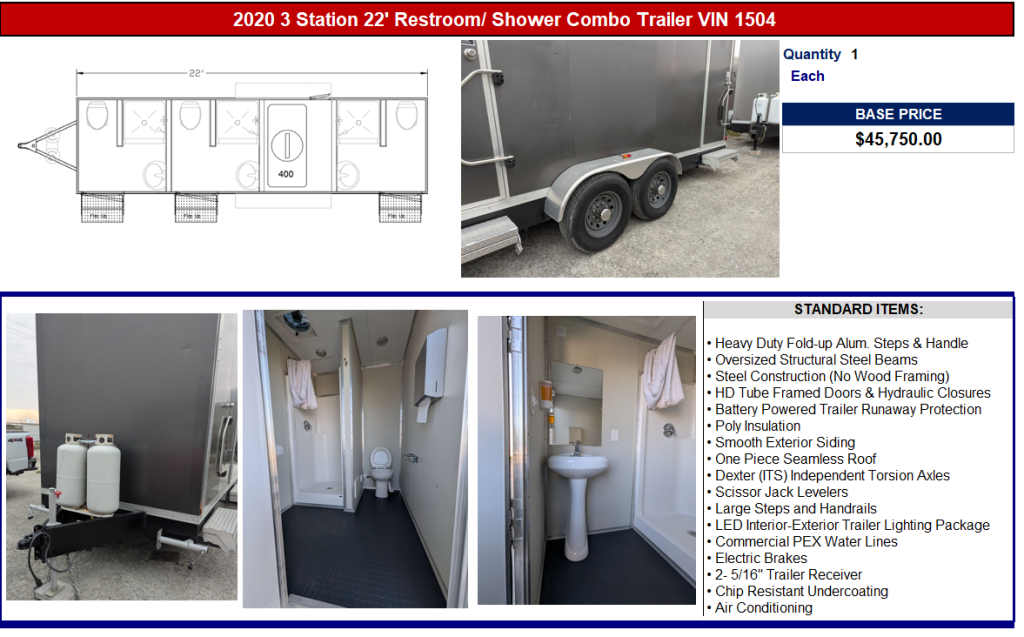
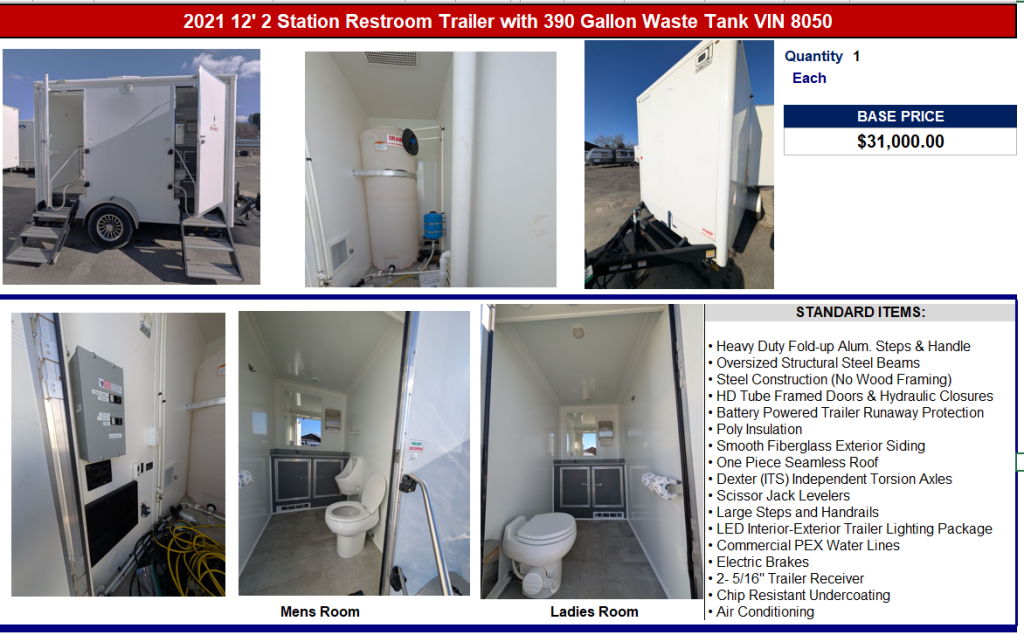
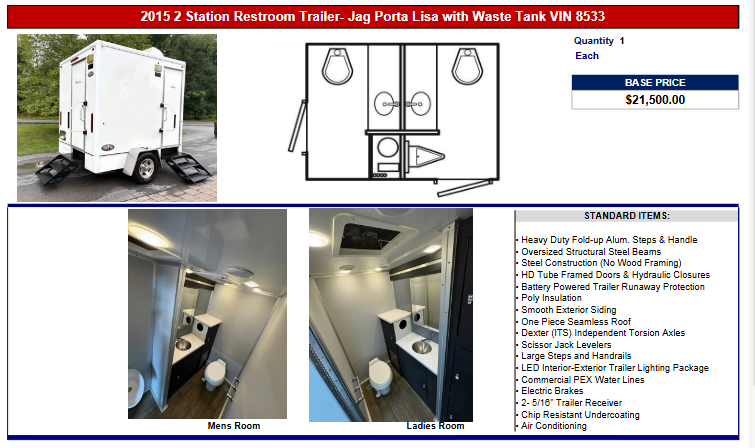
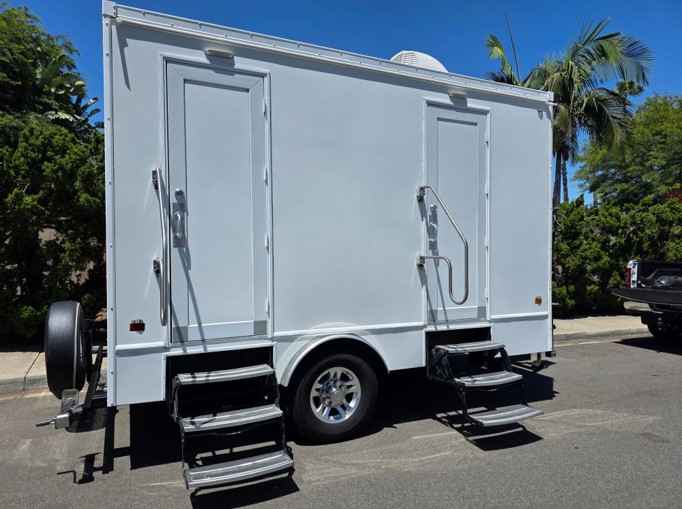
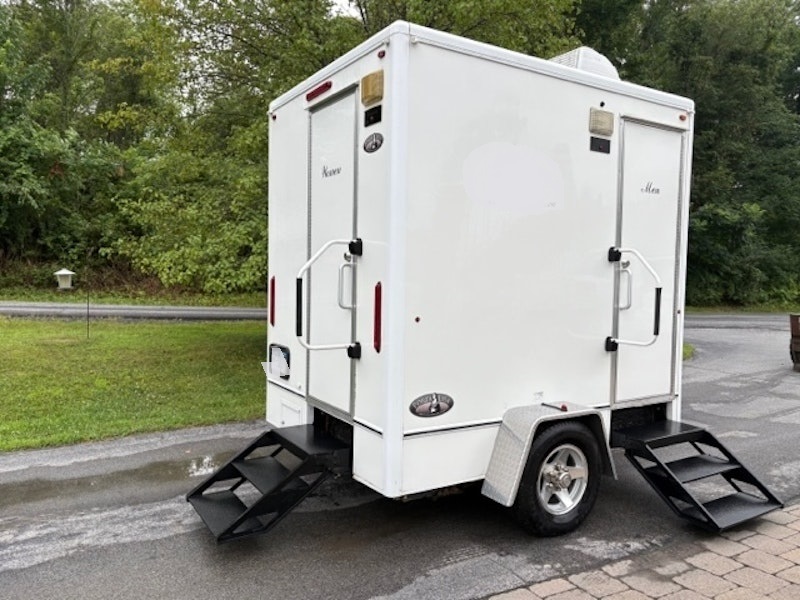
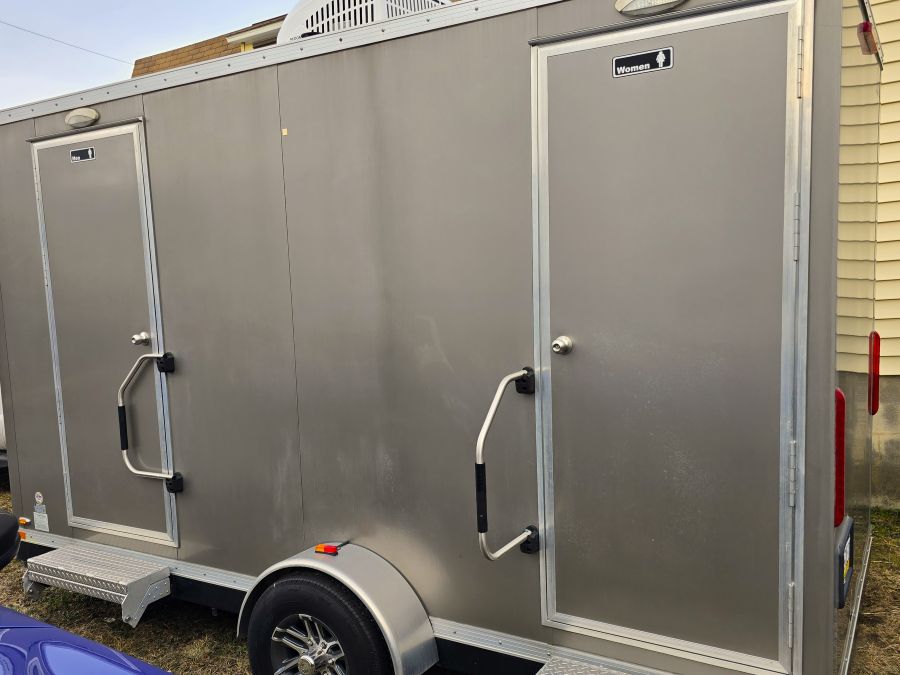
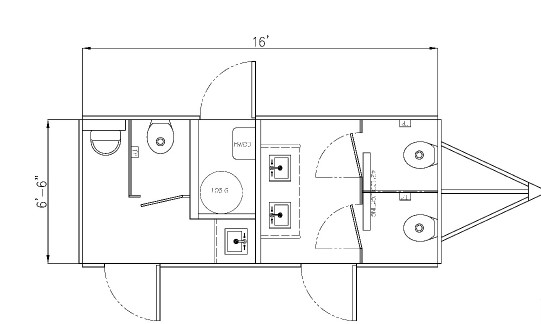
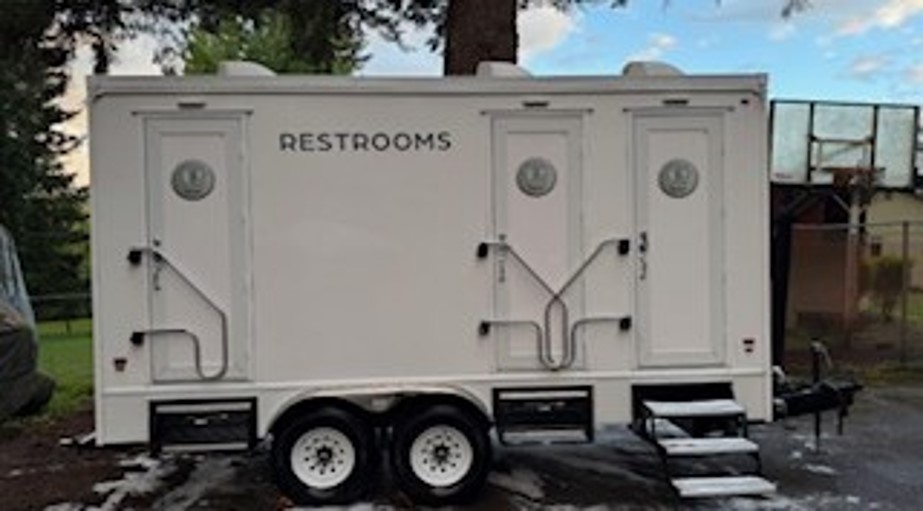
- Restroom trailers — on-site restroom facilities sized to responder count
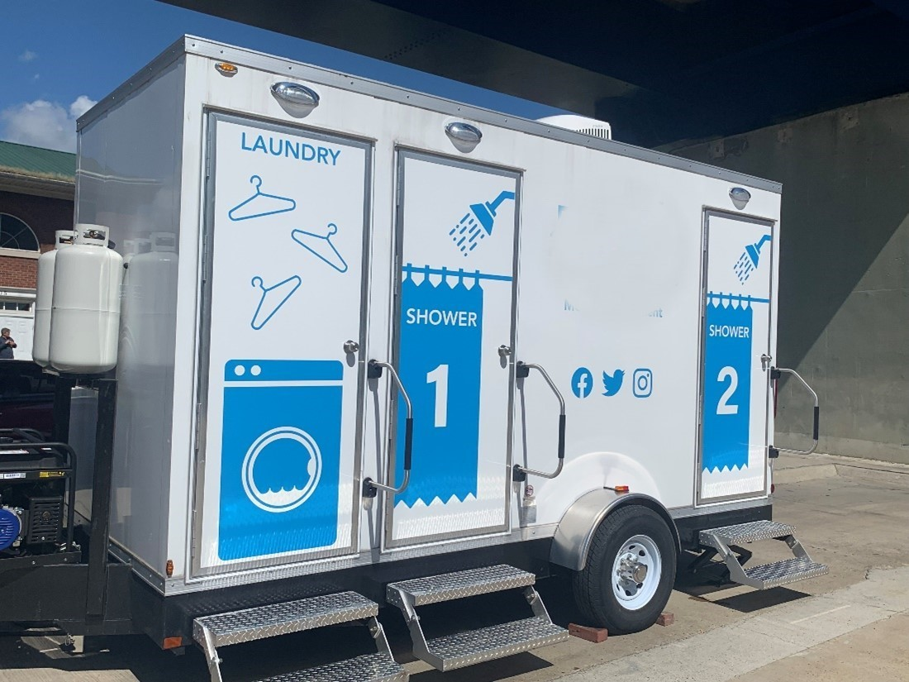
- Shower trailers — hygiene facilities for extended deployments
- Decontamination trailers — hazmat decon and contaminated-environment response
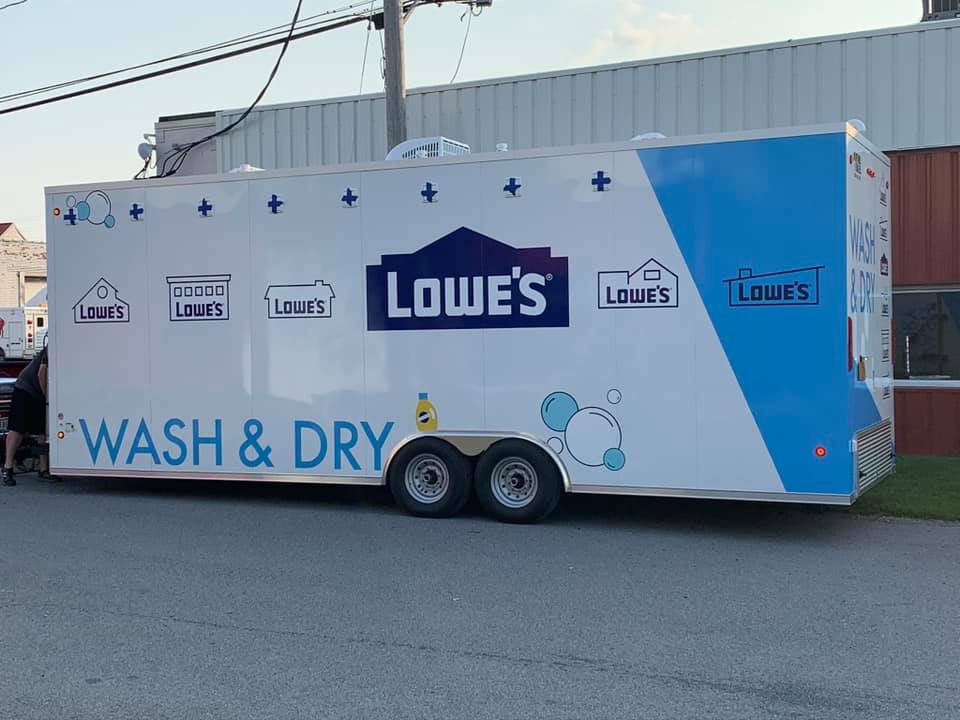
- Mobile laundry trailers — clothing and gear cleaning for extended-deployment crews
For large incidents, agencies often deploy multiple specialty trailers as integrated response infrastructure — command center for operations, base camp for rest, restroom and shower trailers for hygiene, and bunkhouse trailers for sleeping. See our emergency response trailers overview for the full lineup.
Renting vs. Buying a Command Trailer
Most agencies face the same decision when command-level infrastructure becomes a need: rent or buy?
- Rent when deployment is incident-driven, short-term, or unpredictable — and when capital purchase isn’t budgeted
- Buy when the unit will be deployed multiple times per year, customized to agency specifications, or staged for rapid response
- Mix when the agency owns a primary command unit and rents additional capacity during large incidents
For ownership-side detail, see our new office and command center trailers and custom command center builds. For rentals, see our mobile command center rentals program.
Choosing the Right Command Trailer for Your Operation
The right command trailer for your agency depends on a handful of practical questions. Most agencies work through these before committing to a configuration:
- How many workstations do you need? Single-room command serves 2-3 positions; multi-workstation configurations support 4-8+ positions for full ICS operations.
- How long are typical deployments? Short-duration tactical operations have different requirements than multi-day or multi-week incidents.
- What communications equipment will you run? Radio, satellite, broadband, and integrated dispatch systems all affect wiring and power requirements.
- Will the trailer be staged or deployed? Agencies that pre-stage for rapid response need different specifications than agencies that deploy on demand.
- What’s the deployment environment? Cold-weather operations, remote terrain, and grid-down conditions all affect configuration choices.
- Do you need integrated facilities? Onboard restroom, rest space, or briefing capability adds complexity but reduces the need for additional trailers.
Our team works directly with agency procurement, emergency management coordinators, and federal contracting officers to match configuration to operational need. Contact us for a consultation on your specific use case.
Frequently Asked Questions About Mobile Command Trailers
What’s the difference between a mobile command trailer and a command vehicle?
Command vehicles are self-propelled — typically built on a truck or RV chassis. Command trailers are towed to the deployment site, then unhitched and operated independently. Trailers generally offer more interior workspace per dollar, more configuration flexibility, and lower total cost than equivalent command vehicles. Vehicles offer faster individual deployment when speed-to-scene is the priority. Many agencies use both — a vehicle for first-response command and a trailer for extended operations.
How long does it take to set up a command trailer on-site?
Setup typically takes 30 to 60 minutes from arrival to operational status. The trailer is positioned and leveled, power is connected (generator or shore power), HVAC is started, and communications equipment is brought online. For incident-driven deployments, our team can pre-stage units to reduce setup time further.
Does the command trailer include communications equipment?
NRT command trailers include the wiring infrastructure, power, and workspace for communications equipment — radio mounts, antenna ports, data drops, and dedicated electrical capacity. Most agencies supply their own radios, antennas, computers, and incident-specific gear. The trailer is built to support whatever communications stack your agency operates.
Can a command trailer operate without grid power?
Yes. Most NRT command trailers are configured with onboard generator capability for off-grid operation. Shore power connections are available when grid power is accessible. For extended deployments, our team coordinates generator fuel logistics so the trailer can run continuously through long incidents.
How many people can work inside a command trailer at one time?
Capacity depends on configuration. Single-room command trailers typically support 2-4 working positions. Multi-workstation configurations support 4-8 dedicated workstations plus standing or transitional space for additional personnel. Command + briefing configurations add separate briefing space for 8-12 people. For larger operations, multi-trailer setups extend total operational capacity.
Can the command trailer be customized for our agency?
Yes. NRT builds fully custom command trailers with specifications matched to agency operations, including custom communications wiring, dedicated workstation configurations, integrated briefing space, reinforced security packages, branded exterior packages, and integrated onboard facilities (restroom, rest space). See our custom command center builds page for details.
Does NRT work with federal and government procurement?
Yes. NRT works directly with government agency procurement, federal contracting officers, and emergency management coordinators on purchase terms, rental arrangements, and deployment logistics. We support short-term incident-driven rentals, long-term staged deployments, and outright purchase for agencies building permanent fleet capacity.
Where does NRT deliver command trailers?
NRT delivers nationwide from facilities in Murfreesboro, Tennessee and West Seneca, New York. Every delivery includes coordinated transport, on-site placement, leveling, and connection support. For incident-driven deployments, our team works around the clock to coordinate expedited delivery to staging sites or active operations. See our service areas page for regional coverage details.
Get a Command Trailer Built for Your Operation
Whether you’re evaluating a rental for an active incident, scoping a purchase for permanent fleet capacity, or sizing a multi-trailer deployment for a large operation, our team is ready to help. Request a quote online or contact our team directly with your operation type, deployment timeline, and configuration needs.